Download
1 / 26
270 likes | 404 Vues
This guide presents evidence-based methodologies for treating methamphetamine (MA) abuse and dependence, addressing critical issues such as acute overdose, psychosis, and withdrawal. It outlines treatment methods including cognitive-behavioral therapy, outpatient counseling, and supportive interventions. Emphasis is placed on relapse prevention, managing protracted cognitive impairments, and fostering abstinence. The document also reviews the Matrix Model's efficacy through longitudinal follow-up data, providing valuable insights for clinicians and patients navigating the challenges of MA recovery.

E N D
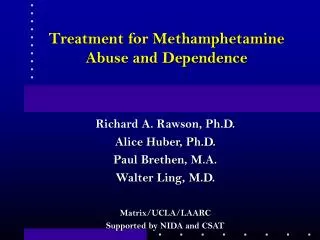
Treatment for Methamphetamine Abuse and Dependence Richard A. Rawson, Ph.D. Alice Huber, Ph.D. Paul Brethen, M.A. Walter Ling, M.D. Matrix/UCLA/LAARC Supported by NIDA and CSAT
MA Treatment Issues • Acute MA Overdose • Acute MA Psychosis • MA “Withdrawal” • Initiating MA Abstinence • MA Relapse Prevention • Protracted Cognitive Impairment and Symptoms of Paranoia
Acute MA Overdose • Slowing of Cardiac Conduction • Ventricular Irritability • Hypertensive Episode • Hyperpyrexic Episode • CNS Seizures and Anoxia
Acute MA Psychosis • Extreme Paranoid Ideation • Well Formed Delusions • Hypersensitivity to Environmental Stimuli • Stereotyped Behavior “Tweaking” • Panic, Extreme Fearfulness • High Potential for Violence
Treatment of MA Psychosis • Typical ER Protocol for MA Psychosis • Haloperidol - 5mg • Clonazepam - 1 mg • Cogentin - 1 mg • Quiet, Dimly Lit Room • Restraints?
Treatment of MA Disorders • Traditional Treatments • Therapeutic Community • Minnesota Model • Outpatient Counseling • Psychotherapy
MA “Withdrawal” - Depression - Paranoia - Fatigue - Cognitive Impairment - Anxiety - Agitation - Anergia - Confusion • Duration: 2 Days - 2 Weeks
Treatment of MA “Withdrawal” • Hospitalization/Residential Supervision if: • Danger to Self or Others, or, so Cognitively Impaired as to be Incapable of Safely Traveling to and from Clinic. • Otherwise Intensive Outpatient Treatment
Treatment of MA “Withdrawal” • Intensive Outpatient Treatment • No Pharmacotherapy Available • Positive, Reassuring Context • Directive, Behavioral Intervention • Educate Regarding Time Course of Symptom Remission • Recommend Sleep and Nutrition • Low Stimulation • Acknowledge Paranoia, Depression
Treatment of MA Disorders • State of Empirical Evidence • No Information on TC or “Minnesota Model” Approaches • No Pharmacotherapy with Demonstrated Efficacy • Results of Cocaine Treatment Research Extrapolated to MA Treatment
Initiating MA Abstinence • Key Clinical Issues • Depression • Cognitive Impairment • Continuing Paranoia • Anhedonia • Behavioral/Functional Impairment • Hypersexuality • Conditioned Cues • Irritability/Violence
Initiating MA Abstinence • Key Elements of Treatment • Structure • Information in Understandable Form • Family Support • Positive Reinforcement • 12-Step Participation • No Pharmacologic Agent Currently Available
Follow-up of 114 MA Users Treated with Matrix Model Mean Duration of Follow-up - 40 Months
MA - CocaineFollow-up Comparison • Matrix Clinic in Rancho Cucamonga, San Bernardino County located 50 miles East of Los Angeles • One to five years follow-up of 100 MA and 100 cocaine users in a CSAT funded study