Download
1 / 12
130 likes | 258 Vues
Project Cancer Education (PCE) is a pioneering initiative that immerses policymakers in the complexities of cancer care. Launched in 2007 by Jennifer K. Carlson at the OSU Comprehensive Cancer Center, PCE provides an interactive platform where Congressional staffers, state legislators, and community leaders assume roles of researchers, physicians, and patients. Through hands-on activities, they gain insights into the significance of NIH/NCI funding, the intricacies of cancer research, and the importance of informed decision-making for the future of cancer care.

E N D
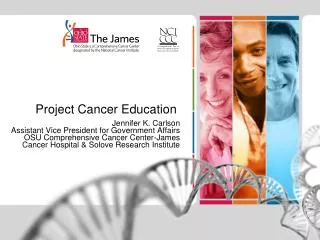
Project Cancer Education Jennifer K. Carlson Assistant Vice President for Government AffairsOSU Comprehensive Cancer Center-James Cancer Hospital & Solove Research Institute
Origin of the Program Background: 2007 Conducted a focused Project Medical Education program educating Congressional staffers a first-hand look at medical education as the foundation of America's world-class health care system. 2008 Developed cancer-centric research modules emphasizing bench-to-bedside research. 2009 Created Project Cancer Education program for federal and state policymakers. Announced PCE as an advocacy tool for the Association of American Cancer Institutes (AACI) 2010 Created ad hoc advisory board at OSUCCC-James and AACI Launching PCE program at the NCI in June/July
What is Project Cancer Education? Through interactive sessions, attendees assume the roles researchers, physicians, and patients to experience first-hand the complexities of research-based cancer care.
PCE participants learn about: • The role of research • The financial burdens associated with world-class cancer care • Our academic mission and community commitment.
Primary Goals Educate policymakers and opinion leaders about the value of NIH/NCI funding Provide these key decision-makers with an experience that gives them a greater understanding of our multiple missions. • Create a more accurate knowledge base among policymakers and opinion leaders so that they are sufficiently informed to make thoughtful decisions about future funding sources.
The Model Program “Seeing and doing” rather than “listening” Participants become researchers, oncologists and patients And follow their paths by: attending meetings and patient rounds, taking part in simulated exercises, engaging with patients, and tracking actual patient case scenarios from diagnosis through survivorship. Adaptable to medical schools, teaching hospitals and multiple institutions
Elected officials and community leaders better understand: • Value and investment of NIH/NCI research; • Who we are and how we give back to the community; and • How their decisions, policies and actions can strengthen the global war on cancer.
Other participants Hospital board members Business leaders Caucuses State legislators and committee staff Governor’s office County commissioners Press contacts Donors School and hospital staff Affiliated hospital staff
Ideas for hands-on activities Mini anatomy lecture Suturing pigskin Minimally invasive surgery Telemedicine Mini clinical trial experiments Standardized patient Patient simulator
Next Steps: Utilizing Resources Workshop planning sessions One-on-one program support Feedback on your programs Best practices meetings
Program Benefits Increased participant knowledge on the issues you care about most Improved relationships with your participant base Strengthened synergy among leadership and staff; institution and community Opportunity to highlight accomplishments and explain challenges