Download
1 / 19
190 likes | 314 Vues
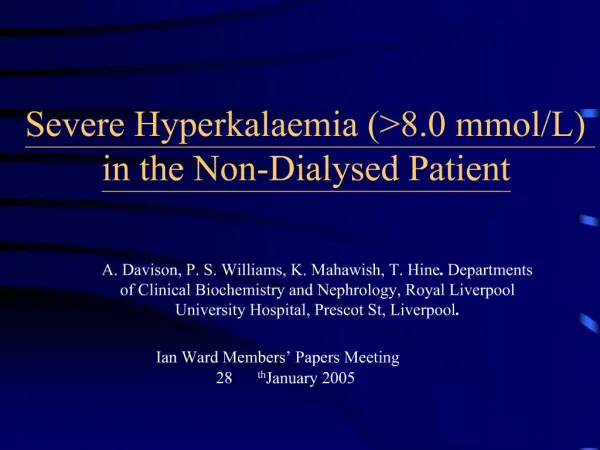
This paper discusses the critical condition of severe hyperkalaemia in non-dialysed patients, presenting a case study from the Royal Liverpool University Hospital. The authors, including A. Davison and P. S. Williams, explore the biochemical mechanisms leading to potassium elevation and the associated risks, particularly cardiac arrest. By highlighting the clinical implications and management strategies, this research aims to raise awareness among healthcare professionals regarding the dangers of hyperkalaemia and the urgent need for monitoring and intervention in at-risk patients.

E N D
1. Severe Hyperkalaemia (>8.0 mmol/L) in the Non-Dialysed Patient A. Davison, P. S. Williams, K. Mahawish, T. Hine. Departments of Clinical Biochemistry and Nephrology, Royal Liverpool University Hospital, Prescot St, Liverpool.
Ian Ward Members’ Papers Meeting 28th January 2005
2. Hyperkalaemia Why is it dangerous? Cardiac arrest