
Exploring Scyphozoans: The Fascinating Life of True Jellyfish
Scyphozoans, commonly known as true jellyfish, are captivating marine creatures primarily found in plankton. They swim by pulsating their bell and have a life cycle where the medusa stage is predominant. Notably, the Cyanea species features a bell diameter of 7-10 feet and long tentacles reaching 200-230 feet. As carnivores, they primarily feed on fish and large invertebrates, utilizing their fused tentacles for digestion. Some species, like upside-down jellies, have symbiotic relationships contributing to their survival. Caution is necessary as certain jellyfish, such as box jellies, can be fatal to humans.

Exploring Scyphozoans: The Fascinating Life of True Jellyfish
E N D
Presentation Transcript
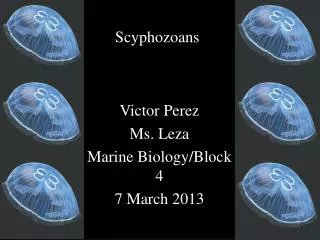
Scyphozoans Victor Perez Ms. Leza Marine Biology/Block 4 7 March 2013
I. The Basics • Class: Scyphozoa • Commonly known as true jellyfish • Not strong swimmers (swim by pulsating their bell). • Float along with currents and are part of plankton. • Medusa is the predominant stage in the life cycle.
II. The Structure • The medusae of the Cyanea, have a bell diameter of 7-10 ft. wide and 200-230 ft. long tentacles.
III. Life for the Jellyfish • Carnivores (feed mainly on fish and large invertebrates). • Upside Down Jellies trap plankton by mucus. • Lacks a true mouth • Food passes thru fused tentacles by cilia to openings of the gastrivascular cavity (where it’s digested).
IV. Life Continued • Upside down jellies chill in lagoons because sunlight and they reach symbiotic algal cells to provide them Oxygen and Nutrition. • Box jellies are tropical animals and are box shaped. • Feed mainly on fish • Stings can be fatal to humans. • Sometimes Jellies get to close to shore in Australia where sea Wasps are and they close the beaches.
