Ancient Civilizations
This comprehensive overview delves into the rich tapestry of ancient civilizations, starting with the Paleolithic period (40,000-8,000 BCE) marked by hunter-gatherers and captivating cave paintings in Western Europe, including the renowned Lascaux Cave. Transitioning to Ancient Egypt (8,000 BCE-300 BCE), we explore its monumental architecture, religious practices, and artistic expressions such as tomb paintings and sculptures that reflect a deep reverence for the afterlife. We also examine Mesopotamia (8,000 BCE-300 BCE), focusing on its unique deities, architectural wonders like ziggurats, and musical heritage. The journey culminates with the Hebrews, their significance in Israel, and the cultural values reflected in their traditions and art.

Ancient Civilizations
E N D
Presentation Transcript
Ancient Civilizations Paleolithic, Egypt, Mesopotamia & the Hebrews
Paleolithic40,000-8,000 BCE • “Stone age” • Hunter-gatherers
Geographic Location • Worldwide • Cave Paintings found mostly in W. Europe • Megalithic Structures also W. Europe
Philosophical Beliefs • Polytheism (many gods) • Fertility deities • Nature gods • Venus of Willendorf
Art • Lascaux Cave-France • Paleolithic Times • 15000 BCE
Ancient Egypt • 8000 BCE-300 BCE • Location: Modern day Egypt & Sudan (North Africa)
Assignment • Draw your own tomb painting in Egyptian style • Include three “fun” (but appropriate for school) activities you would like to do in the afterlife • Use Egyptian-style figures • You have 10 minutes
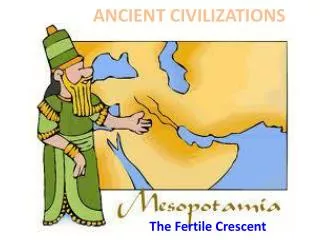
Mesopotamia • 8000 BCE-300 BCE • Location: Modern-day Iraq
Mesopotamian Religion http://hum.lss.wisc.edu/~mfox/Religions%20of%20the%20ANE/Mesopotamia/Gods_and_Monsters.htm
The Hebrews • 8000 BCE-present • Location: Modern-day Israel
The “Graven Image” concept Notice there’s NO pictures here!
Ancient Hebrews: DanceHava Naguila (aka Hora)Folk DancePurpose: Social
Hebrews Exit Slip • Explain two ways the Hava Naguila dance reflects the values of the Hebrews’ culture.