Understanding Continental Drift: The Movement of Earth’s Crust
60 likes | 187 Vues
In this engaging 4th-grade science lesson, Mrs. Snyder explores the dynamic movement of Earth's continents. Students will discover how massive pieces of the Earth's crust shift and slide, much like a jigsaw puzzle. By observing maps and animations, learners will see the relationships between continents and the forces driving their movement. The activity includes comparisons to a conveyor belt, illustrating how convection currents in the mantle lead to tectonic shifts and collisions between plates, ultimately reshaping our planet.


Understanding Continental Drift: The Movement of Earth’s Crust
E N D
Presentation Transcript
Position of the continents Mrs. Snyder 4th grade science
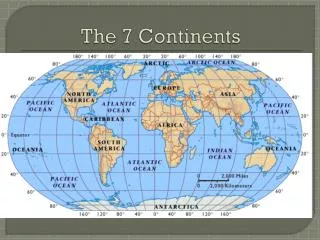
Changes • Watch the change in the position of the continents. • What is causing these massive pieces of the Earth’s crust to move? Look at your map of the world. Focus on the borders of the continents.
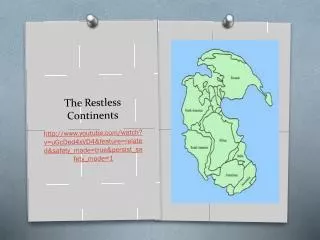
The Earth: A jigsaw puzzle • Notice how the pieces of this puzzle fit together • Look at your map of the world again, which continents seem as if they fit together well?
Watch themovementhappeningunder the crust • Yellow = very hot rock moving from toward the Earth’s crust • Blue = cool sections of the crust and upper mantle sinking down toward the center of the Earth
Conveyor Belts Think about the way a conveyor belt moves groceries. This is a useful analogy to describe the way the crust moves on top of the mantle.
Watch this animation, and this one. Think about how a “conveyor belt” driven by convection could move the Earth’s plates and change positions of the continents. Watch this video (You Tube) to see the way plates collide. What process results in one moving beneath the other? Moving continents