Download
1 / 19
190 likes | 312 Vues
Master the art of time management with a structured approach that helps you identify goals, set priorities, and create effective daily plans. This guide offers a comprehensive overview of developing actionable time management plans, scheduling strategies that align with your productivity cycles, and tips for handling common obstacles such as interruptions and crises. Learn to commit to your plan, make realistic time estimates, and prioritize tasks effectively. Discover the benefits of proactive planning and boost both the quality and quantity of your work.

E N D
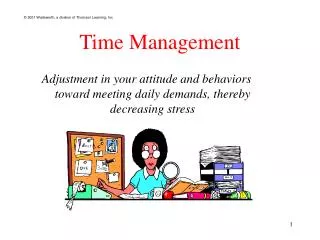
Time management plans Unit objectives • Develop time management plans to identify goals • Organize your day by creating daily plans and avoiding obstacles
Time management plans • Topic A: Time management plan • Topic B: Daily plan
Time management plan • Determine schedule that works best for you and your company • Time management plan • Identify priorities • Set goals • Schedule your task • Make short-range and long-range goals • See minor and major tasks
Guidelines for planning • Commit your plan to paper • Keep track of time • Correspond activities with productivity cycles • Create your ideal schedule • Modify your current schedule
Obstacles • Interruptions • Projects taking longer than anticipated • Crises
Activity A-1: Preparing for a time management plan
Steps for creating a plan • Identify goals • Determine objectives to meet your goals • Create a strategy • Implement the strategy
Activity A-2: Creating a time management plan
Time management plans • Topic A: Time management plan • Topic B: Daily plan
Daily plan • Benefits of planning • Decreases time spent making decisions • Reduces crises • Gives direction • Increases proactive activity • Increases the quantity and quality of work
Obstacles to planning • Unnecessary routine tasks • Lack of immediate rewards • Not in the habit of planning
Activity B-1: Handling obstacles
Steps for planning your day • Set aside 15 minutes every day • Write down all tasks you need to accomplish • Prioritize tasks • Correspond each task with productivity cycles • Estimate how long each task takes • Assign a time of day to each task
Activity B-2: Identifying the steps to plan a day
Guidelines for making daily plan • Make realistic time projections • Account for interruptions • Do not include long-range goals
Schedule effectively • Schedule a time for every task in your list • Make it a habit to follow your plan • Be dedicated to your schedule
Tasks not to schedule • Tasks you can delegate • Tasks performed to please others • Thoughtless or inappropriate requests for your time
Activity B-3: Using daily plan guidelines
Time management plans Unit summary • Developed a time management plan and identified goals • Created a daily plan and discussed potential obstacles