Download
1 / 29
290 likes | 396 Vues
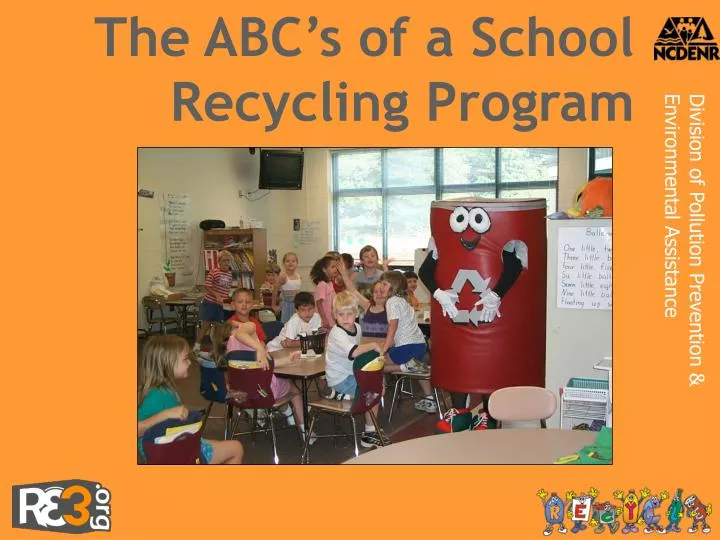
Discover the essential elements of establishing an effective recycling program in schools. Learn how school recycling programs can create community norms, instill a sense of responsibility, and promote environmental stewardship among students. Engage learners with hands-on experiences that foster a deeper understanding of waste reduction. This guide provides insights into the legal support for recycling initiatives, survey results from North Carolina schools, and practical tips to ensure successful implementation and participation in recycling efforts.

E N D
Why Recycle at School? • School recycling programs: • Create community norms • Teach responsibility and environmental stewardship • Provide hands-on learning experiences • Make a difference in waste reduction
General Statute – 2001 Litter Law http://www.ncga.state.nc.us/Sessions/2001/Bills/Senate/HTML/S1014v9.html SECTION 11. The State Board of Education shall report to . . . on the recycling efforts of the public schools in the State. SECTION 12. G.S. 115C‑47 is amended by adding a new subdivision to read: To Encourage Recycling in Public Schools. – Local boards of education shall encourage recycling in public schools and may develop and implement recycling programs at public schools.
Wake County School’sWaste Composition Assessments Waste Composition By Volume: By Weight: Data from Wake County, 2003
School Recycling Survey • Surveys sent to NC school and county representatives • Asked about school recycling operations • 31 surveys received • Surveys represent 1,004 NC elementary, middle and high schools
Survey Results: School Recycling Coordination
Survey Results: Recycling Provider
Survey Results: Financial Impact
Survey Results: Materials Schools Collect
Survey Results: Collection Frequency
Survey Results: Record Keeping • 22,848 pounds of recyclables collected per school per year • = • 11 tons of recyclables per school per year • = • 2 pounds of recyclables per student per year
Survey Results: Student Access to Recycling Bins
Survey Results: Recycling Responsibilities & Training
Tips for Success A. Organize a coordination team
Tips for Success B. Determine which recyclables are in your waste stream
Tips for Success C. Identify a local market for recyclables • North Carolina Markets Directory www.p2pays.org/DMRM • Current Waste Hauler • Curbside or business recycling program
Tips for Success D. Select the type of recycling program
Tips for Success E. Work out a budget for the collection program
Tips for Success F. Establish a system for collecting and storing recyclables
Tips for Success G. Educate the school and the community
Tips for Success H. Set overall and individual goals
Tips for Success I. Reward the doers