Collaborative Strategies for Learning: Enhancing Assessment Practices and Student Involvement
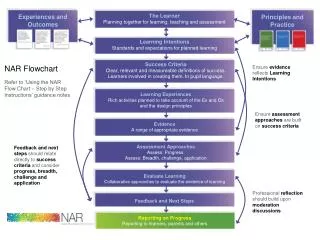
This resource outlines a collaborative approach to evaluate learning outcomes effectively. It emphasizes the importance of clear learning intentions and success criteria, co-created with learners using accessible language. The guide includes detailed steps for using the NAR Flowchart to ensure evidence aligns with learning outcomes. It advocates for rich learning experiences designed with educational standards in mind, incorporating diverse assessment methods. Feedback mechanisms focus on progress, breadth, challenge, and next steps, fostering a reflective practice among educators and clear communication with learners and parents.

Collaborative Strategies for Learning: Enhancing Assessment Practices and Student Involvement
E N D
Presentation Transcript
The Learner Planning together for learning, teaching and assessment Principles and Practice Experiences and Outcomes Evaluate Learning Collaborative approaches to evaluate the evidence of learning Learning Intentions Standards and expectations for planned learning Success Criteria Clear, relevant and measureable definitions of success. Learners involved in creating them. In pupil language. NAR Flowchart Ensureevidence reflectsLearning Intentions Refer to ‘Using the NAR Flow Chart – Step by Step Instructions’ guidance notes Assessment Approaches Assess: Progress. Assess: Breadth, challenge, application Learning Experiences Rich activities planned to take account of the Es and Os and the design principles Ensureassessment approaches are built on success criteria Evidence A range of appropriate evidence Feedback and next steps should relate directly to success criteriaand consider progress, breadth, challenge and application Feedback and Next Steps Professionalreflection should build upon moderation discussions Reporting on Progress Reporting to learners, parents and others