
DNA: The Golden Key of Forensic Evidence
E N D
Presentation Transcript
DNA The Golden Key of Forensic Evidence
DNA • Deoxyribonucleic Acid • Can be taken from cellular tissue or bodily fluids • Examples: hair, bones, blood, skin
DNA Fingerprinting Discovery • 1984 Professor Alec Jeffreys discovers DNA fingerprinting • 1985 DNA fingerprinting used for the first time to solve immigration and paternity cases • 1986 first criminal investigation to implement DNA fingerprinting evidence • 1992 DNA testing proves the innocence of Kirk Bloodsworth, who had spent two years on death row after being convicted of murder • 1992 identification of Josef Mengele by DNA analysis of skeletal remains
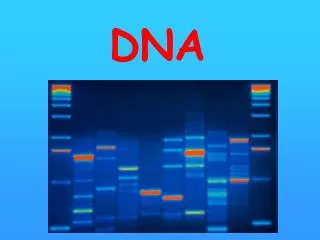
What is DNA Fingerprinting? • DNA holds the genetic instructions for all traits of an individual • Found in the cells of every living organism • Unique for each species and for each individual • Scientists examine the unique sections to find a match between evidence and a suspect, victim, or witness • Scientists take the DNA and make a “fingerprint” or picture for comparison
Why is a Person’s DNA Unique? • DNA is a unique sequence of nucleotides inherited from mother and father • Bases A, T, G, C • The base pairs carry codes for the traits of a particular species and individual • The order of these bases are different for every sexually fertilized egg