Efficient WAN Network Protocols for Seamless Connectivity
110 likes | 131 Vues
Explore .NET protocols for peer-to-peer communication, error detection, session handling, and more. Learn about LANs, WANs, WAN types like private line, Ethernet, MPLS, and VPNs. Discover IP addressing, VOIP integration, and network convergence.


Efficient WAN Network Protocols for Seamless Connectivity
E N D
Presentation Transcript
Network Protocols • Protocols functions: • Communication control – how to communicate (peer to peer, master/slave) • Error detection/correction – how to check for and correct errors • Link management – control traffic flow • Session variables – login, authentication of users, half or full duplex • Synchronization – transfer rates, timing • Addressing – unique ID for nodes; connection oriented (circuit), or connectionless (packet) • Routing – metrics on how best to route traffic • Data segmenting/reassembly – frames, cells, packets, header and trailer • Data formatting – Encryption and compression
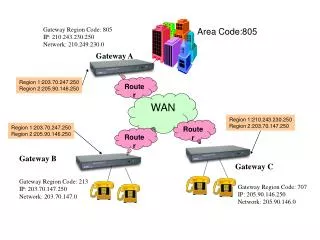
Data Network Types • LAN – Local Area Network • Within a building • WAN – Wide Area Network • Network connecting LANs in many different locations • Focus on WANs
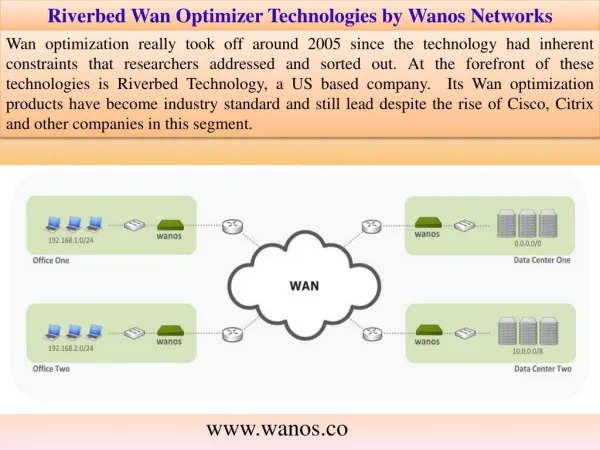
WAN Types • Types of WANs • Public – Internet • Private – Private line, VPN, MPLS
XO IP Network • XO Network Maps
IP • Internet Protocol (IP) mainly an addressing scheme • An IP address has two parts: the identifier of a particular network on the Internet and an identifier of the particular device (which can be a server or a workstation etc.) within that network. On the Internet itself - that is, between the routers that move packets from one point to another along the route - only the network part of the address is looked at. • IPv4 uses a 32 bit address • IPv6 uses a 128 bit address and provides for better QoS • IP address hard to remember so Domain Name Service (DNS) is used to translate names to IP addresses.
Private WAN Types • *Private Line (point to point) – Layer 1 • Dedicated circuits between locations TDM or IP. TDM = T1/T3/OCx • Pros – secure, reliable, dedicated bandwidth not shared, supports any protocol • Cons – costly, many circuits to manage at hub or main location
Private WAN Types • *Ethernet (WAN) • Old layer 2 technology used on LANs • Newer to WAN environment • Implemented over SONET for protection or over DWDM backbones • 10/100/1000MB speeds • Interconnect LANs at Layer 2 • Point to point or switched (FE aggregation to GigE) • Pros – matching LAN speeds, simple, cheap (per MB), flat network • Cons – flat network
Private WAN Types • Multiprotocol Label Switching (MPLS) • Layer 2 switching level • Semi private/shared network • Pros – utilizing existing backbone, scaleable, layer 2 – fast, one circuit to manage at HQ, cheaper than private line • Cons – shared type network, not dedicated
Private WAN Types • *Virtual Private Network (VPN) • Layer 3 (IP) utilizing existing Internet • Traffic is encrypted for security • Hub and spoke or Meshed network • Pros – utilizing existing network (internet), scaleable, layer 3, better use of bandwidth • Cons – public network backbone, encryption overhead
Network Convergence • Voice and data networks becoming one • More efficient and economical • Very attractive for branch office design • Using dedicated or private circuits VOIP works well. • Utilizing the Internet for VOIP is still unreliable.