Download
1 / 16
160 likes | 271 Vues
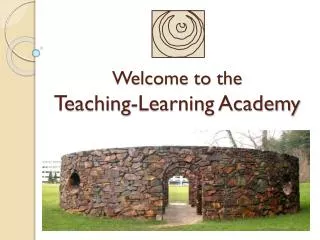
Welcome to the Teaching-Learning Academy (TLA) at Western Washington University, where a community of scholars, including students, faculty, and administrators, collaborates to enrich the learning culture. Through courses and volunteer opportunities, students engage in meaningful dialogues and projects aimed at improving teaching practices. Celebrating 11 years of student voices, TLA focuses on co-inquiry and interdisciplinary learning experiences. Together, we strive for a reflective learning culture that encourages innovation, understanding, and community partnerships.

E N D
A Community of Scholars Studying and Enhancing Western’s Learning Culture Overview
Participants • Administrators • Faculty • Staff • Students • Community Members
How do students participate in TLA? The majority of students participate as part of their coursework in one of several courses: • Educ 109 • Comm 322 • Comm 339 (Applied Practicum in Communication) Other students participate on a volunteer basis.
2010: Celebrating 11 Years of STUDENT VOICES at Western Washington University
TLA at Canada House and Beyond… “Students as Co-Inquirers” Interest Group in the International Society for the Scholarship of Teaching and Learning (ISSOTL) Teaching-Learning Academy Conferences and forums, e.g. Scholars Week Center for Education, Equity and Diversity A.S. Student Voices Club
Objectives • A deeper understanding of teaching and learning • Multiple perspectives to enhance learning • Action projects to enhance Western’s learning culture • Student voices in learning initiatives • Celebrating contributions to teaching and learning
Activities • Meet bimonthly in dialogue groups • Sponsor all-campus forums on teaching and learning • Create campus partnerships • Share findings locally, nationally and internationally • Lead special interest group on “Students as Co-Inquirers” within the International Society for the Scholarship of Teaching and Learning (ISSOTL)
Process • Together develop a BIG question on T&L to study for the year. • Use question to survey ourselves. • Invite others into the study. • Analyze the results. • Share findings and translate into action.
Overall Results Participants report: • more positive attitudes toward students/faculty/staff • new insights into teaching & learning • more informed teaching & learning practices • advancement of institutional change initiatives
Agreements Be respectful. Listen patiently with the primary goal of understanding. Give everyone adequate air time & work to create a safespace for taking risks. Be open. Work to understanddifferences, not to erase them. Try out new ideas & be open to disagreeing, making new connections, & challenging old views. Be direct. Say clearly what you expect from others. Ask questions when you don’t understand. Avoid presumptions; ask others what they think & why. Be present. Engage actively, but know that silence sometimes is ok. Try to be prompt. Resist technological distractions. Come ready to contribute & listen. Be ethical. Honor rights of others. Be honest in asking for & giving feedback; be fair in evaluating others and their ideas.
Facilitation • Facilitate: to make easy • Use Agreements to ensure air time for all • Student facilitators – Comm 322 & Comm 339 students
TLA BIG Question for 2009-2010 • What do WE mean by a sustainable, reflective learning culture? • And how might we use that shared understanding to strengthen connections: • between existing resources and members of the campus community to provide individualized guidance and co-mentoring? • between the lived experiences of teachers and learners outside of the classroom and what is happening in the classroom to provide engaging learning experiences? • across borders within WWU and between WWU and external communities to provide interdisciplinary/community-based learning experiences?
Hallmarks of a Reflective Learning Culture • More time and slowed pace • Inspiring, natural places • Encouragement of creative & innovative ways to learn and teach • Exploratory activities such as writing, drawing/ painting, creative movement • Time to work bothalone and with groups
Moving from Talk to Action 09-10 New insights and 5 reflective learning proposals: Campus Commons Promising Practices Common Interest Groups Community Welcome Days Reflective Garden
Next Steps… Developing a BIG question together~ So what’s on your mind? Developing a BIG question together~ So what’s on your mind?