
Understanding Supernovas: The Life and Death of Stars
E N D
Presentation Transcript
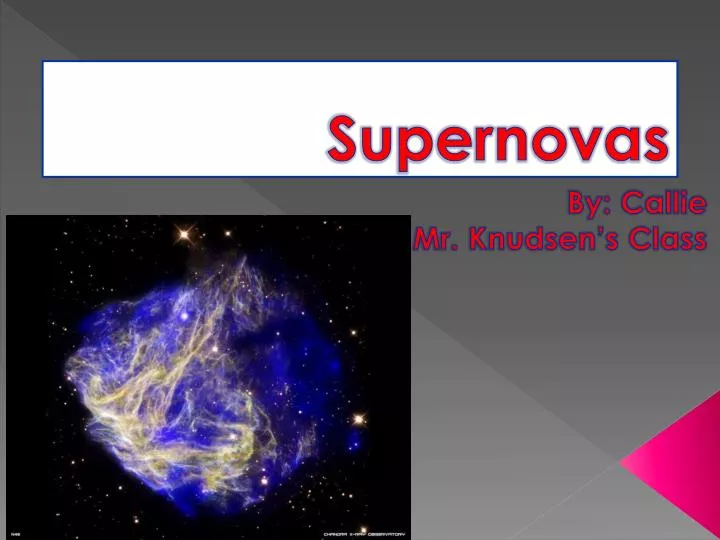
Supernovas By: Callie Mr. Knudsen’s Class
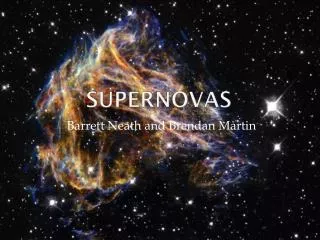
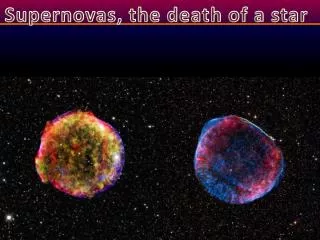
What supernovas are. • Supernovas are stars exploding. • Supernovas happen with stars called red super giants. • Did you know that the sun is to smallfor a supernova?
The sun is to small? Yes, the sun is to small for a supernova. What the sun will do first is transform into a red giant. Then, it will lose all of it’s hot gas, what’s left? A white dwarf. The white dwarf will fade after a few days.
How supernovas happen. • First, a star will swell into a vast red star, called a red supergiant. Then it will blow up with a colossal explosion, called a supernova. • When a star dies in a huge supernova explosion, only it’s dense core may survive.
Facts about supernovas. • Did you know? The biggest and brightest supernova most recently viewed from earth occurred in 1987. • Did you know? Another candidate to become a supernova is the red giant star, Betelgeuse, located at the shoulder of Orion (the hunter). If it flared up tomorrow night, it would mean the blast actually occurred 600 years ago, a few years before Christopher Columbus sailed of to find the new world.