The Great Leap Forward
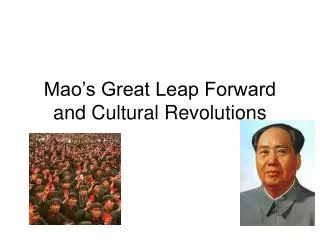
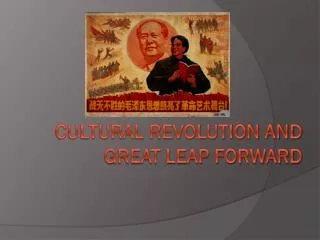
The Great Leap Forward, initiated by Mao in 1958, aimed to rapidly industrialize and collectivize China. It established 26,000 communes from 700,000 farms, leading to mass gatherings of people but ultimately causing severe food shortages and leading to the deaths of 15 million from starvation. The Cultural Revolution followed, promoting radical social changes through the Red Guard and the Little Red Book, seeking to eliminate the “Four Olds.” Both movements aimed to establish a classless society but resulted in significant societal upheaval and suffering.


The Great Leap Forward
E N D
Presentation Transcript
What is it? • Radical program instituted by Mao in 1958 • Targets: • Industry • Agriculture • 700,000 collective farms became 26,000 communes • 30,000+ people lived and worked together
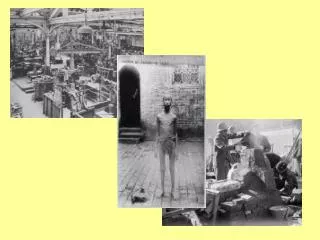
What is it? • Backyard furnaces created homemade steel • Too weak to be used for quality construction • Took people away from farms—not enough food!
Goals • Reach the final stage of communism: classless society • “Hard work for a few years, happiness for a thousand”
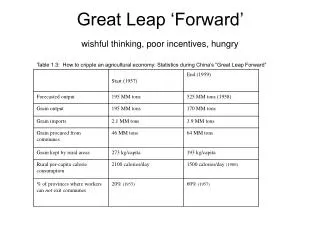
Results • Droughts and floods limited productivity • Peasants hated the new system • 15 million died of starvation • 1960s: communes broken up and collective farms restored
Goals • Create a great proletarian class
Features of Cultural Revolution • Little Red Book • Most important source of knowledge • Permeated society (schools, homes, workplaces, etc.) • Conversation piece
Red Guard • Militant, revolutionary group • Goal: to eliminate the ‘Four Olds’ • Old Ideas • Old Customs • Old Culture • Old Habits
Red Guard • Anti-foreigner • Music • Art • Architecture • Attacked those who “went against Mao’s plan” • Intellectuals and artists • Became too intense for many