Download
1 / 7
70 likes | 200 Vues
In the first chapter of "Language, Mind, and Brain," Ewa Dabrowska critiques contemporary linguistic theories that isolate linguistic cognition from broader cognitive processes. She argues that such theories fail to consider relevant biological and psychological insights. Additionally, Dabrowska highlights a concerning trend among some linguists who prioritize theoretical constructs over empirical data, especially corpus studies. By emphasizing the significance of natural language corpora, she advocates for integrating diverse linguistic phenomena into research for a more comprehensive understanding of language.

E N D
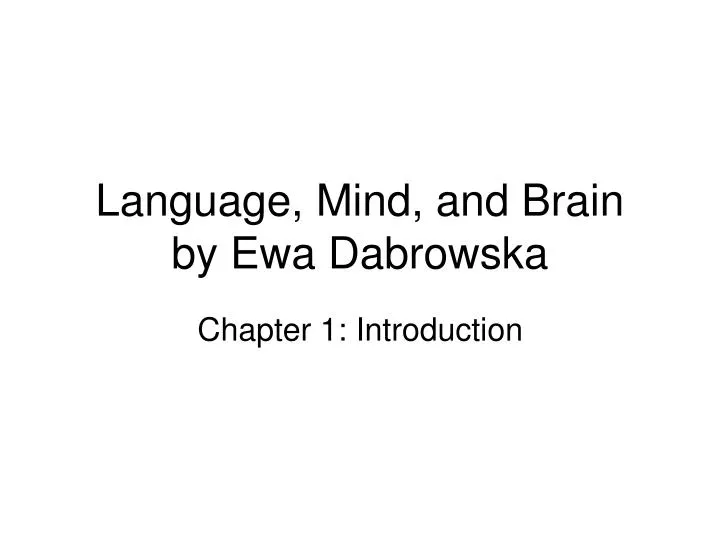
Language, Mind, and Brainby Ewa Dabrowska Chapter 1: Introduction
Separate or Accountable? • Q: Why does the author take issue with certain developments in linguistic theory?
Separate or Accountable? • Q: Why does the author take issue with certain developments in linguistic theory? • A: Because some theories assume that linguistic cognition is separate from other parts of human cognition, and are therefore not held accountable for what is known about the biology and psychology of the brain and mind.
Linguistic data • Q: Why does the author take issue with the attitude of some linguists toward empirical data?
Linguistic data • Q: Why does the author take issue with the attitude of some linguists toward empirical data? • A: Some linguists value theory over data and focus on phenomena that are marginal, although it is possible to learn a great deal from corpus data.
Corpus data • Q: What is a corpus?
Corpus data • Q: What is a corpus? • A: A corpus is a collection of unelicited natural language representing a balance of genres. Many corpora (British National Corpus, Russian National Corpus, with about 100 million words each) are available on-line with advanced search engines to facilitate linguistic research.