Psychotic disorders
Psychotic disorders. Psychosis. Psychosis is a disruptive mental state Individual has difficulty distinguishing external reality from his or her own internal experiences and perceptions. Psychosis Presenting complaints. Hearing voices when no one is around, seeing visions

Psychotic disorders
E N D
Presentation Transcript
Psychosis • Psychosis is a disruptive mental state • Individual has difficulty distinguishing external reality from his or her own internal experiences and perceptions
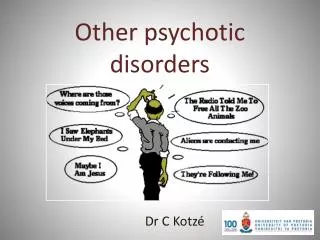
PsychosisPresenting complaints • Hearing voices when no one is around, seeing visions • Strange beliefs or fears • Confusion • Apprehension • Abnormal behaviour
PsychosisPresenting complaints • Fear • Apprehension • Inappropriate smile/laughter • Talking to self • Agitation • Aggressive behavior • Aggression
Causes of psychosis • Alcoholic hallucinosis / Alcohol induced psychosis • Psychosis induced by amphetamines or other substances • Acute psychotic disorder • Schizophrenia • Bipolar disorder, mania • Delusional disorder • Depression with psychotic features • Delirium • Dementia • Head injury
Epidemiology and burden Schizophrenia • The lifetime prevalence rate is 1% • Onset in late teens to early 20s, equally affecting men and women • Devastating disease for both the patient and the family • Affects thoughts and emotions to the point that social and occupational functioning is impaired • About one in a ten with schizophrenia commit suicide
Positive and negative symptoms of Schizophrenia Positive symptoms • Delusions • Hallucinations • Hostility • Disorganised thinking/behaviours Negative symptoms • Alogia • Affective blunting • Anhedonia • Asociality • Avolition • Apathy
Treatment of Schizophrenia • Acute phase treatment with anti-psychotics • Haloperidol, chlorpromazine • Risperidone, Olanzapine • Maintenance treatment with antipsychotics • Depot preparations (Fluphenazine) • Risperidone, Olanzapine, Haloperidol • Family / community support • Rehabilitation
Bipolar disorderManic episode • Persistent elevated, irritable mood ≥ 1 week • Three or four (irritable mood) of the following: • Increased self esteem • Reduced sleep • Increased talk / pressured speech • Racing thoughts / flight of ideas • Distractibility • Extreme goal directed activity • Excessive buying/sex/business investments
Treatment of manic episode • Acute phase treatment with mood stabilisers (Lithium, Divalproate), antipsychotics (Olanzapine) • Maintenance treatment with Mood stabilisers (Lithium, Divalproate, Lamotrigine, Carbamazepine)
Alcoholic hallucinosis • Usually occurs during alcohol withdrawal • Can also occur during prolonged, steady drinking • A hallucinatory or delusional state with clear or relatively clear consciousness • Auditory hallucinations with sexual or derogatory content • Delusions are paranoid • The condition lasts for months rather than days or week
Alcoholic Hallucinosis Alcoholic Hallucinosis Age of onset • 40-50 years Type of onset • Usually acute Duration of illness • 3 months Premorbid personality • A Variety Alcohol dependence • Over many years Paranoid Schizophrenia Age of onset • before 40 Type of onset • Insidious Duration of illness • Chronic Premorbid personality • shy, aloof, withdrawn Alcohol dependence • Not stated
Alcoholic Hallucinosis Alcoholic Hallucinosis Family history of alcoholism • Increased Family history of schizophrenia • No evidence Hallucinations & delusions • auditory but visual and tactile Paranoid Schizophrenia Family history of alcoholism • Not stated Family history of schizophrenia • Increased prevalence Hallucinations & delusions • auditory
Alcoholic Hallucinosis Alcoholic Hallucinosis Thought processes • Coherent Affect • Anxious, depressed, perplexed but appropriate Intellectual function • Fleeting memory disturbance Orientation • At times not oriented to time Paranoid Schizophrenia Thought processes • Incoherent Affect • Inappropriate Intellectual function • Not compromised Orientation • Not compromised