
SS6H1a: Inca Background
E N D
Presentation Transcript
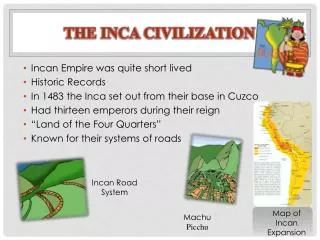
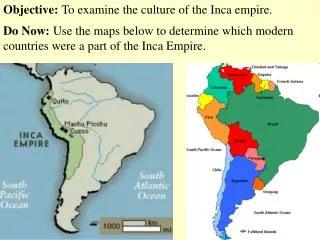
Background • Empire extended along the Pacific coast from northern border of modern Ecuador to central Chile
Economy • Most Inca were farmers. • They cultivated corn, potatoes, squash, tomatoes, chili peppers, and cotton. • The Inca cultivated 240 types of potatoes and over 20 types of corn.
Agriculture • Intensive agricultural techniques • Inca empire spanned many types of environments • Required terraces to make farmland out of the mountainous terrain • Chief crop was the potato • Herded llamas and alpacas for meat, wool, hides, and dung (used as fuel)
Economy • The Inca raised dogs, guinea pigs, and alpacas…. …and why did they raise Guinea Pigs?
Clothing • Most of the Inca’s clothing was made from Llama wool or cotton. • The wool from the Alpaca was used for the clothing of the Emperor and his nobility.
Other Jobs • Incas not involved with farming might have been potters., cloth makers, or …
Architecture • The Inca could build without using mortar. • They cut huge stones slabs to exact fit.
Inca Roads • The Inca built a paved road system • It included over 16,000 miles of roadway • The longest system ran north and south along the coast of Chile and inland • There were east and west roads to interconnect to the north and south roads
New Technologies Major Roads of the Inca Empire
Social Structure • The Incas had a very clear social structure. • The ruler, the Sapa Inca, and his wives, the Coyas, had supreme control over the empire.
Social Structure • The High Priest • Military • Then came the Four Apus, the regional army commanders. • Temple priests, architects, administrators and army generals. • Merchants and Middle Class • artisans, musicians, army captains and the Incan "accountants." • Sorcerers, farmers, herding families • Slaves
Quipus • A quipus consists of a main cord from which pendant cords hang. (Pendants of pendants are called subsidiaries.)
Quipus The quipus was used to record censuses, inventories, tribute records, and documents about transactions; Spanish courts also accepted them as documents of record in early colonial times.
Religion • Main god was Inti, god of the sun • In the capital of Cuzco, some 4,000 priests, attendants, and virgin devotees served Inti