Abolitionists
This presentation explores the abolitionist movement in America, highlighting its key figures and their ideals. It examines the motivations behind abolitionism, from the early Quakers to outspoken leaders like William Lloyd Garrison and the Grimké sisters. Garrison's "The Liberator" and the establishment of the American Anti-Slavery Society in 1833 played crucial roles in advocating for immediate emancipation and racial equality. The presentation also discusses the political involvement of abolitionists and their reactions to significant events like the Emancipation Proclamation and the 13th Amendment.

Abolitionists
E N D
Presentation Transcript
Abolitionists By: Jack Morrison Period 6
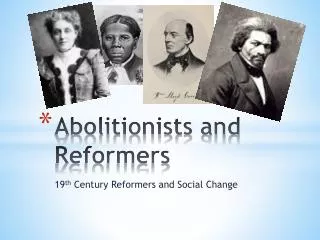
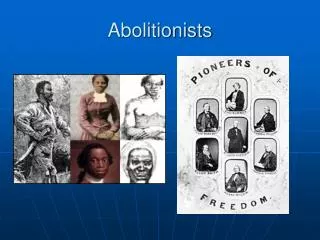
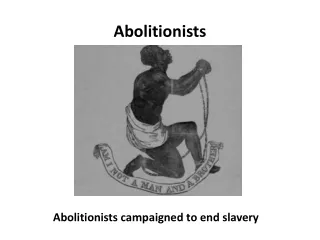
Who were the abolitionists? Wanted to put an end to slavery Opposed slavery for many different reasons Quakers were among first group of abolitionists Some thought that blacks should be treated as well as whites, but others didn’t support political and social equality for the blacks
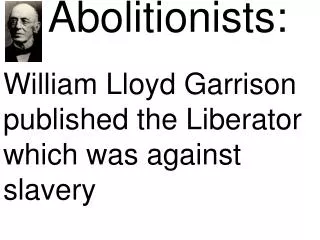
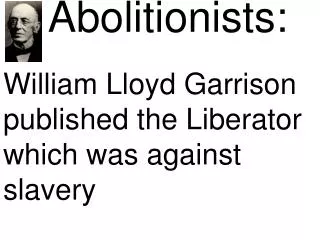
William Lloyd Garrison One of the most outspoken and controversial leaders in the abolitionist movement Began to publish an antislavery newspaper, the Liberator, in 1831 Helped create the American Anti-Slavery Society in 1833 Later became the president of this society American Anti-Slavery Society demanded immediate emancipation and racial quality for African Americans
Sarah and Angelina Grimké Some of the best known antislavery activists of the 1830s Rejected their parents support of slavery and moved to Philadelphia Angelina attempted to bring other white southern women to case through her pamphlet, Appeal to the Christian Women of the South Published in 1836 Sisters became first female members of American Anti Slavery Society
American Anti Slavery Society Started in 1833 William Lloyd Garrison and Arthur Tappan were among those who founded it. Frederick Douglass was a key leader of the society 250,000 members by 1838 Headquartered in New York City Published a daily newspaper called the National Anti Slavery Standard in 1840
Abolition Movement Most well known abolition leaders came from New England Some entered Liberty Party and also the Free Soil Party in 1840 Many abolitionists supported the republican party after 1854 Were interested in causes in political offices Were happy when Abraham Lincoln issued the Emancipation Proclamation and when 13th amendment was added to Constitution in 1868
Other Pictures An Appeal to the Christian Women of the South The Liberator
"Neither slavery nor involuntary servitude...shall exist within the United States 13th Amendment