Key Events in the Civil Rights Movement: From Little Rock to Freedom Riders
80 likes | 232 Vues
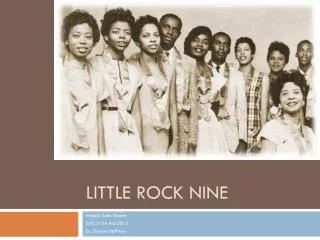
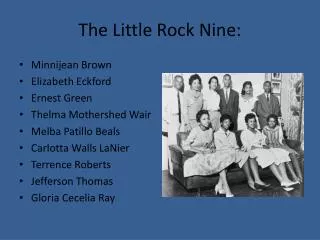
This overview highlights pivotal moments in the American Civil Rights Movement, beginning with the Little Rock Nine in 1957, when nine Black students faced intense opposition while attempting to integrate a high school in Arkansas. The federal government's intervention, led by President Eisenhower, marked a significant turning point. Then, it chronicles the Greensboro Four sit-in in 1960, sparking nonviolent protests and a wave of sit-ins across the South. Lastly, it details the Freedom Riders of 1961, who bravely challenged segregation in interstate travel, facing violence but laying the groundwork for future legal changes.


Key Events in the Civil Rights Movement: From Little Rock to Freedom Riders
E N D
Presentation Transcript
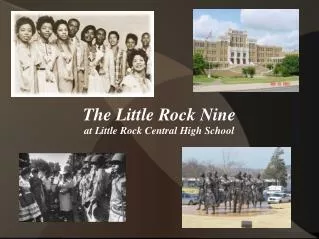
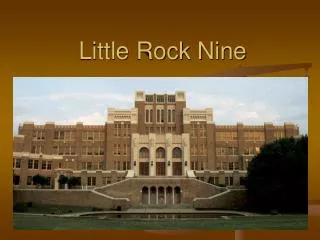
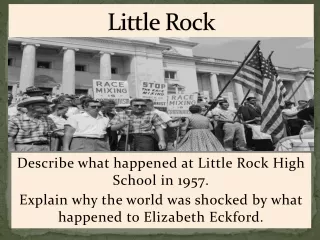
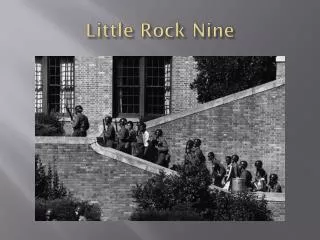
1957 • Not all schools integrate easily. Little Rock, AR school blocks nine black students from entering on order from the Governor. • President sends in National guard and federal troops to intervene.
Greensboro 4 • Four college students sit-in at a segregated lunch counter and try to order lunch. They are refused, though are allowed to stay. • Sparks similar sit-ins throughout the south. • Six months later the men are finally served lunch • Sit-ins would be effective throughout the south in parks, pools, theaters, etc.
Freedom Riders • Students began taking bus trips in the south. • They are testing the new laws against discrimination on travel (bus and rail). • Attacked by angry mobs along the way.
1962James Meredith • James Meredith becomes first black student to enroll at Univ. of Mississippi. • Riots ensue. • Kennedy sends 5,000 federal troops to deal with it.