
Overview of Phylum Porifera: Characteristics, Classes, and Reproduction
This curriculum preview discusses Phylum Porifera, highlighting key characteristics of these diploblastic, asymmetrical, aquatic organisms. It explores their canal system and asexual reproduction methods. The phylum encompasses three major classes: Calcaria, which contains calcareous spicules (e.g., Ascon, Sycon); Hexactinellida, characterized by silicious spicules and spongin fibers (e.g., Euplactella); and Demospongiae, which may lack a distinct skeleton. This overview serves as an introduction to the diverse structures and functions found within sponge organisms.

Overview of Phylum Porifera: Characteristics, Classes, and Reproduction
E N D
Presentation Transcript
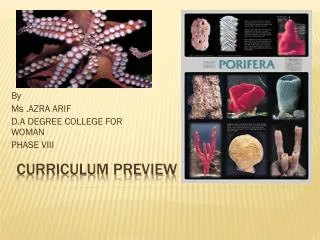
By Ms .AZRA ARIF D.A DEGREE COLLEGE FOR WOMAN PHASE VIII Curriculum preview
Characteristics Pore bearer organism Diploblastic ,asymmetrical, aquatic organism Canal system Asexual reproduction Have three classes PHYLUM PORIFERA
Have calcareous spicules Examples Ascon , sycon Class: calcaria
Have SILICIOUS SPICULES EXAMPLE; EUPLACTELLA class: hexactinellida
HAVE SLICIOUS SPICULES OR SPONGIN FIBRES MAY BE WITHOUT SKELETON (SPICULES NOT SIX RAYED) EXAMPLE; SPONGILLA CLASS: DEMOSPONGIA