Effective Market Segmentation for Tailored Product Design and Targeted Marketing Efforts
Market segmentation is crucial for designing products and services that align with customers' expectations. It enhances communication and customer relationship management, optimizes promotional spending, and strengthens competitive positioning. Segmentation parameters for consumer and industrial markets include demographic, geographic, psychographic, and behavioral factors. Employing methods like cluster analysis, businesses can effectively target market segments based on size, accessibility, and brand loyalty, ensuring optimal resource allocation and marketing efficacy.


Effective Market Segmentation for Tailored Product Design and Targeted Marketing Efforts
E N D
Presentation Transcript
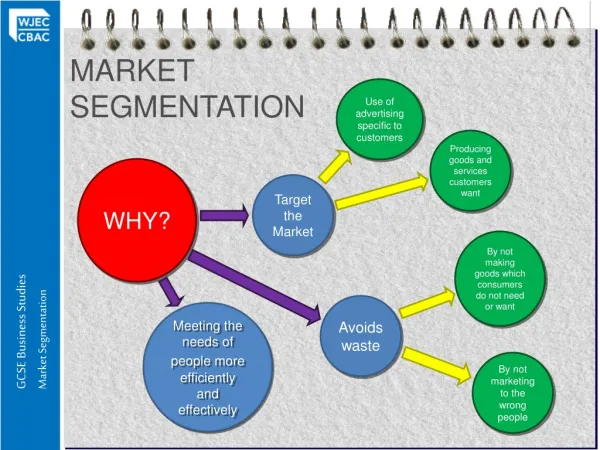
WHY SEGMENTATION: • Designing products and services to match customer’s expectations • Effective and efficient communications and customer relations management (CRM) • Rationalization of promotion expenditures • Enhancing competitive strength
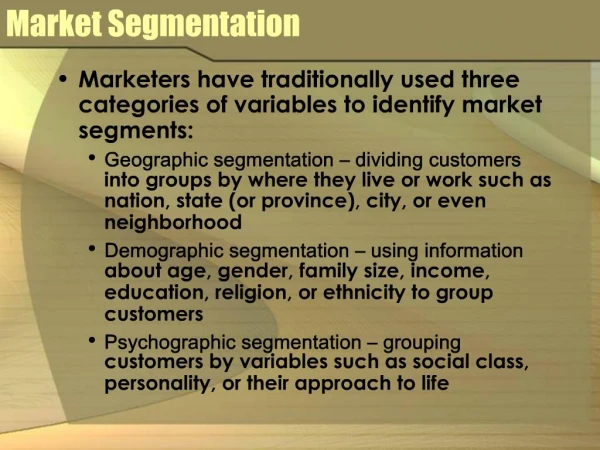
SEGMENTATION PARAMETERS • CONSUMER MARKET • DEMOGRAPHIC • GEOGRAPHIC • PSYCHOGRAPHIC • BEHAVIOR
SEGMENTATION PARAMETERS CONSUMER MARKET • DEMOGRAPHIC • Age • Gender • Income • Education • Occupation • Family Size • Family Lifecycle • Religion • Social status
SEGMENTATION PARAMETERS CONSUMER MARKET • GEOGRAPHIC • Region • Urban or Rural • State size • Market density • Climate • Terrain
SEGMENTATION PARAMETERS CONSUMER MARKET • PSYCHOGRAPHIC • Personality attributes • Mode of adoption • Risk acceptance • Consumption Propensity • Motives • Biological • Security • Societal • Self esteem • Lifestyles
SEGMENTATION PARAMETERS CONSUMER MARKET • BEHAVIOR • Benefit Expectations • Brand Loyalty • Price Sensitivity
SEGMENTATION PARAMETERS • II- INDUSTRIAL MARKET • Industry type • Size of company • Geographic location • Purchase decision • Adoption mode • Benefit sought • Product usage • Price sensitivity • Brand loyalty
SEGMENTATION PARAMETERS • II- INDUSTRIAL MARKET • Purchase decision • Centralized • Decentralized
SEGMENTATION PARAMETERS • II- INDUSTRIAL MARKET • Adoption mode • Innovators • Early adopter • Early majority • Late majority • Laggards
METHODS OF MARKET SEGMENTATION Cluster Analyses I - Rank Ordering Clustering II - Hierarchal Technique III - K Means Technique
TARGETING MARKET SEGMENTS CRITERIA OF SELECTION OF A TARGET SEGMENT • SIZE • PUBLICITY • EASY TO ACCESS • EASY TO SATISFY • EASY TO SUPPORT • PRICE INSENSITIVE • BRAND LOYAL • ADOPTION MODE • INCOME • NUMBER OF COMPETITORS • PROFITABILITY • GROWTH POTENTIAL
Example AHP Product: Laptop Market Segments: • Lecturers • Students • Businessmen Targeting Criteria: • Size • Price Sensitivity • Mode of Adoption • Publicity Leading Particulars of the three segments REQUIRED to define the Ranking of the Market Segments as regards to the FOUR Targeting Criteria.