Urban Fiction for Teens
210 likes | 329 Vues
Urban fiction for teens reflects the harsh realities of inner-city life, featuring diverse characters facing poverty, violence, and tough choices. This genre goes beyond "street literature," incorporating themes of drug culture, homelessness, and gang life, often concluding with moral lessons. It engages both boys and girls, presenting compelling stories relevant to today's youth. While it is critically acclaimed for its authenticity, urban fiction also faces scrutiny for its violence and portrayal of lifestyles. Librarians and parents are encouraged to foster discussions about these books to better understand their impact.


Urban Fiction for Teens
E N D
Presentation Transcript
Urban Fiction for Teens Jennifer Fleck Summer Hayes Jill Morrison Brenna Shanks
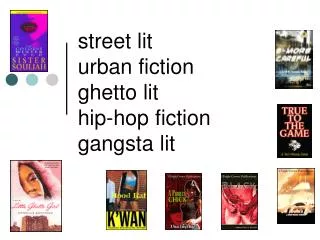
“Street” vs. “Urban” • Broader genre than “Street Lit” • Homeless teens • Characters of all races • Drug culture • High interest nonfiction • Graffiti • Life in Prison • Gang Biographies/Autobiographies • Bleak and harsh urban setting • African American/Latino characters • Plot usually follows the main character from a young child or teen to adulthood • Characters make tough decisions to survive the poverty and violence in their lives • The choices the characters make often have tragic results and the book ends • Ends with moral lesson (and sometimes a bible verse!)
Just who is reading this stuff? • Equally popular with boys and girls • Inner city kids whose lives are reflected on the pages • Kids from the suburbs looking for gangsta lifestyle
Why do we need to know about it? • Exploding genre • Huge demand • Traditionally underserved population • Age appropriate titles for teens
Quality Issues Too violent! This stinks! But it isn’t LITERARY! Insulting! Racist! This is practically porn! This is degrading! Derogatory!
Strategies for addressing complaints • Congratulate adult for involvement in her or his child’s reading • Explain why the item is in the collection generally • Note that appeal to students and teens does not necessarily reflect real life • Leave final decision between adult and child. • Encourage adults to: • Continue to talk to child about reading • Keep conversation open and on-going • Ask his or her child what they like about the book • Express concerns with material and why
"A lot of people shun it, but it's a reality and it's somebody's reality. To shun it is to deny someone's reality.“ -Pamela Johnson, Macavelli Press