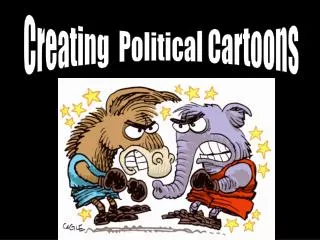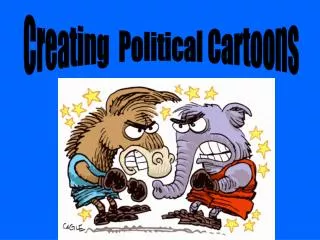
Creating Political Cartoons
200 likes | 335 Vues
This guide outlines essential techniques for creating professional political cartoons that resonate with viewers. Emphasizing the importance of avoiding stick figures, the use of color, shading, and detailed imagery is crucial. Facial expressions are vital to convey the author’s viewpoint clearly. Key elements include utilizing labels, titles, and dialogue for clarity. Incorporate historical facts and literary techniques like symbolism, caricature, and parody to enhance your messages. Remember to analyze cartoons critically by considering their effectiveness in delivering clear messages and captivating imagery.


Creating Political Cartoons
E N D
Presentation Transcript
MUST • Be professional! NO stick people. • Colored in, shaded, or include details!
MUST • Use facial expressions to show author’s view
MUST • Use images that capture the reader’s eye
MUST • Share author’s viewpoint (opinion) and need no explanation; use labels, titles, & dialogue
MUST • Use historical facts and show preparation
MUST • Use literature techniques (begin w/ symbolism)
Literature Techniques
Personification: giving human characteristics to inanimate non-living objects or animals
Parody: humorous use of popular works of art (T.V. shows, movies, fairly tales, etc) to make a point
Sarcasm: a biting, cutting, often ironic remark used to make fun of someone or something
FINAL HINT: #1.Use things you know and understand. (i.e. household items, chores, lunch, school, games, etc.)
FINAL HINTS: 2. Make sure it’s a cartoon, not a picture of the topic.
Analyze and Grade Political Cartoonsfor Grading • What is the author’s message clear? • What is it? • What literature technique was used used? • Explain. • Does the cartoon have stand out images • that catch the eye? • Does the cartoon use enough details? • Is the artwork professional? Explain.