Exploring Aquatic Ecosystems: From Freshwater to Marine Habitats
This comprehensive overview delves into various aquatic ecosystems, highlighting the distinct characteristics of flowing water, standing water, and marine environments. It covers essential ecosystems such as rivers, lakes, wetlands, estuaries, and coral reefs, providing insight into their flora and fauna, including phytoplankton, zooplankton, and salt-tolerant trees. Special focus is given to nutrient cycling through detritus and the unique adaptations of organisms in diverse habitats, from the intertidal zones to the deep open ocean, revealing the intricate web of life in our waters.

Exploring Aquatic Ecosystems: From Freshwater to Marine Habitats
E N D
Presentation Transcript
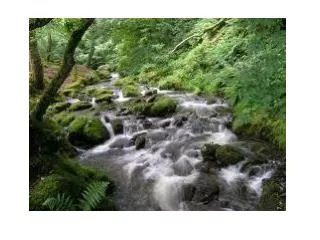
Flowing-Water Ecosystems • Rivers, streams, creeks • Plenty of dissolved oxygen • Turtles and beavers make home down stream
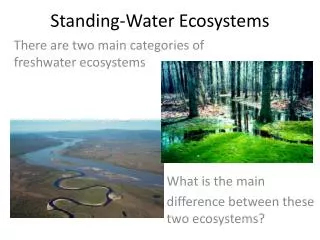
Standing-Water Ecosystems • Lakes and Ponds • Plankton: general term for the tiny, free-floating organisms that live in both freshwater and saltwater. • Phytoplankton: unicellular algae • Zooplankton: feed on phytoplankton
Freshwater wetlands • An ecosystem where water covers the soil or is present at or near the surface for at least part of the year. • Bogs • Marshes • Swamps
Estuaries • Where the river meets the sea • Freshwater and saltwater mixed • Detritus: tiny pieces of organic material that provide for organisms at the base of some aquatic food webs.
Salt Marshes • Temperate-zone estuaries • Salt-tolerant grasses above low-tide line • Sea grasses under water
Mangrove Swamps • Tropical coastal wetlands • Found in Southern Florida and Hawaii • Several species of salt-tolerant trees
Marine Zones • Salt water • Photic zone: where sunlight can reach • Aphotic zone: sunlight cannot reach. • Divided into intertidal, coastal, and open ocean zones.
Intertidal Zone • Zonation: the prominent horizontal banding of organisms that live in a particular habitat.
Coastal Ocean • From the outer edge of the intertidal zone to the outer edge of the continental shelf. • Kelp forests
Coral Reefs • Hard calcium carbonate skeletons make up their primary structure. • Plants or animals?????????
Open Ocean • More than 90% of Earth’s ocean • Examples of animals that occupy this zone:
Benthic Zone • The ocean FLOOR. • Dependent on detritus