Rethinking Globalization: Challenging Inequity and Consumption Post-Pandemic
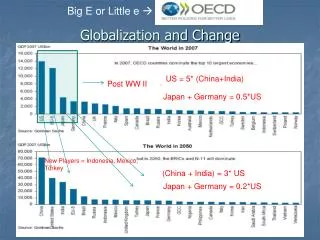
In a rapidly globalizing world, the challenge of addressing deepening inequity while encouraging sustainable consumption has never been more pressing. As emerging economies like China, India, Indonesia, Mexico, and Turkey reshape the landscape, we must confront the legacy of post-WWII economic structures that prioritize growth over equity. This moment demands a reevaluation of the consumptive mindset that fuels climate change. We must balance the value of personal wealth against the need for global equity, fostering a more sustainable model for future generations.

Rethinking Globalization: Challenging Inequity and Consumption Post-Pandemic
E N D
Presentation Transcript
Big E or Little e Globalization and Change US = 5* (China+India) Post WW II Japan + Germany = 0.5*US New Players = Indonesia, Mexico, Turkey (China + India) = 3* US Japan + Germany = 0.2*US
The Consumptive Mandate Waveform: if you got more, consume even more: Maintain BAU Greed sustainability
Accelerated Climate Change CONSUMPTION
Correct this • Our view of the world as a resource to use up must change! • Profit vs Equity: Surplus Growth or Equity? Growth or Prosperity? • This is your generations challenge:
There is some indication that this is starting to change slowly
Summary • Once again, the issue is not that inequity exists but rather that the amplitude of the inequity is enormous (and getting larger) • The bias of GDB is that this situation is the end result of e continually trying to implement E in a social Darwinist manner • However, bubble collapse now gives us a second chance to behave differently which do we value more – personal wealth or global equity?