Protecting Migratory Birds: Sustainable Tourism and Community Livelihoods
The Destination Flyways project aims to protect migratory birds and their habitats while fostering sustainable livelihoods for local communities. By developing innovative, sustainable tourism products along major migratory routes—including the East Atlantic, West Asian-East African, Central Asian, and East Asian-Australasian Flyways—this initiative seeks to enhance habitat management, provide diverse tourism options, and position tourism as a driver for sustainability. The project is implemented in collaboration with organizations such as BirdLife International and the UNWTO, ensuring effective conservation and tourism practices.

Protecting Migratory Birds: Sustainable Tourism and Community Livelihoods
E N D
Presentation Transcript
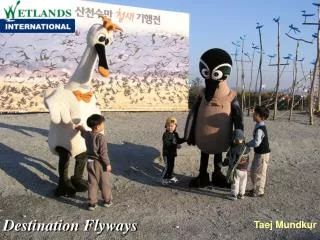
Destination Flyways Taej Mundkur
Destination Flyways • The project focuses on the protection of migratory birds and their habitats and the creation of sustainable livelihoods for local communities through the development of innovative sustainable tourism products along the following: • East Atlantic, West Asian - East African, Central Asian and East Asian – Australasian Flyways
Destination Flyways - Objectives • Enhanced management and protection of valuable habitats for migratory birds • Creation of sustainable livelihoods options for the local communities through development of a diversified sustainable tourism offer • Positioning of tourism as an engine for sustainability vis-à-vis other productive sectors • Effective implementation of Conventions/ Agreements related to conservation of migratory birds and tourism
Destination Flyways • Implementing partners • BirdLife International • Convention on Migratory Species Secretariat • Wetlands International • United Nations World Tourism Organization (UNWTO). • Advisory partners • Convention on Biological Diversity Secretariat • International Union for the Conservation of Nature • Ramsar Convention Secretariat • UNESCO Man and the Biosphere • World Heritage Centre • Overall coordination UNWTO
Proposed Timeline • 2013-2014 • Site Assessments • Proposal development • Fund raising • 2014-2018 • Project implementation • Supported by the Federal Ministry of the Environment, Nature Conservation and Nuclear Safety of Germany