Preparing Your Garden for Fall: A Guide by Certified Master Gardener Tom Watkins
As the fall season approaches, it's essential to prepare your garden for the cooler months. Remember to irrigate your landscape plants and fruit trees, with an average November rainfall of 0.81 inches, you may reduce irrigation schedules. Now is a great time for fall plantings; consider cool-season flowers such as pansies and snapdragons. Also, plant native and drought-adapted species. Maintain healthy lawn turf with proper fertilization and weed control, and clean up your garden by composting plant residue.

Preparing Your Garden for Fall: A Guide by Certified Master Gardener Tom Watkins
E N D
Presentation Transcript
Preparing Your Garden for Fall Tom Watkins – Certified Master Gardener Prescott Valley
Irrigation • Remember to irrigate landscape plants and fruit trees • Average rainfall in November is 0.81 inches • Can decrease schedules times of irrigation • Maintains vigor of plants • Reduces likelihood of pest problems
Fall Plantings - Flowers • May plant cool season flowers • Prepare soil by digging in lots of composted matter mixed with small amount of nitrogen fertilizer • Types of flowers: Pansies, Poppies, Sweet Peas, Snapdragons
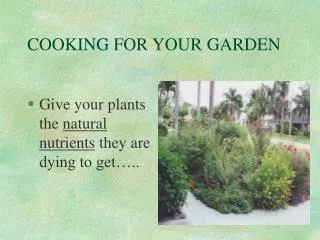
Fall Plantings – Landscape • Good time to plant native & drought adapted plants • Examples: Globe mallow, acacia, mesquite, • Use the improved planting standard • Do not prune fruit tees/roses until Feb/Mar
Turf • Cool season turf; fescue, bluegrass, ryegrass • Fertilize with one pound of nitrogen per 1,000 sq. ft. • Remember one pound of nitrogen fertilizer does not equal one pound of nitrogen applied • Apply turf fertilizers evenly so not to concentrate it in any one area
Helping Your Garden Grow Acidic Alkaline
Cool Season Weeds • May use a pre-emergent herbicide • Consider mulches (At least 3 inches deep) to help control weeds • Attractive mulches: wood chips, bark • Mulching is good soil protection and water conserving
Clean Up • Clean up your vegetable garden and flower beds • Compost healthy plant residue • If you don’t have a compost pile, consider starting one • May plant cool season crops • Consider planting a cover crop; annual rye, barley etc.