Download
1 / 1
10 likes | 168 Vues
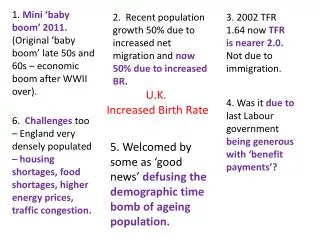
The 2011 baby boom in the UK reflects a significant demographic shift, where the population growth spiked by 50% due to increased net migration and now another 50% attributed to rising birth rates. The Total Fertility Rate (TFR) has risen from 1.64 in 2002 to nearly 2.0, not primarily due to immigration. This upturn may correlate with the Labour government's generous benefit payments. While some view these trends positively as a solution to an ageing population, they also bring challenges such as housing shortages, food scarcity, energy price rises, and traffic congestion.

E N D
1. Mini ‘baby boom’ 2011. (Original ‘baby boom’ late 50s and 60s – economic boom after WWII over). 2. Recent population growth 50% due to increased net migration and now 50% due to increased BR. 3. 2002 TFR 1.64 now TFR is nearer 2.0. Not due to immigration. U.K. Increased Birth Rate 4. Was it due to last Labour government being generous with ‘benefit payments’? 6. Challenges too – England very densely populated – housing shortages, food shortages, higher energy prices, traffic congestion. 5. Welcomed by some as ‘good news’ defusing the demographic time bomb of ageing population.