Download
1 / 16
160 likes | 276 Vues
In this chapter on stress management, we explore key concepts such as stress, eustress, distress, and stressors. Learn about Hans Selye's General Adaptation Syndrome, its three stages: alarm, resistance, and exhaustion, and the physical and emotional toll of stress. Discover effective coping strategies across physical, social, environmental, and psychological aspects. Gain insights into time management techniques to balance responsibilities and overcome anxiety. Embrace realistic perspectives on stress and cultivate resilience for personal growth and well-being.

E N D
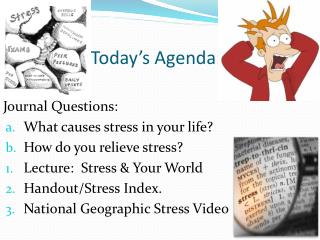
Identify the Following Terms • Stress • Stress response • Eustress • Distress • Stressors
General Adaptation Syndrome (Hans Selye, 1975) • 3 Stages: • alarm (fight or flight) • resistance (homeostasis) • exhaustion (illness, emotional/psychological breakdown)
Hypertension Stroke Heart disease Kidney disorders Depression Alcoholism Gastro-intestinal Auto-immune disorders Sexual dysfunctions Physical Toll of Stress
Homesickness Relationship problems Balancing work, home, school responsibilities Test anxiety Speech anxiety Math anxiety Learning ability College Student Stress
Using Time Effectively • Time management techniques such as: • Assess habits (good vs. bad) • Use a daily planner consistently • Set goals and prioritize each day • Don’t procrastinate • Don’t try to be a “Perfectionist”
Type A Often pressured Ambitious Impatient Competitive Walk/talk rapidly Easily annoyed by delays Type B Calm Relaxed Easy-going patient Type A vs. Type B (Friedman & Rosenman) Type A is correlated with stress and should be recognized
Effective Coping Strategies • There are four different forms of strategies to cope with stress • Physical Aspects • Social Aspects • Environmental Aspects • Psychological Aspects
Physical Aspects of Stress Management • Nutrition • Exercise • Sleep • Circadian rhythms
Social Aspects of Stress Management • Make time to have fun and play • Laughter is effective • Human contact through social connections • Pets can make differences with reduction of stress
Environmental Aspects of Stress Management • Reduce noise levels • Amount/Type of light • Meaningful and challenging experiences • Aesthetic quality of inhabited space • Color • Plants • Photos • smell
Psychological Aspects of Stress Management • Meditation and Hypnosis • Cognitive Self-Talk • Progressive muscle relaxation (Jacobson)
Psychological Aspects of Stress Management, cont’d • Relaxation and Deep Breathing (Benson) • Biofeedback • Guided Imagery and Visualization techniques (Cou’e) • Stress Inoculation
Do not be surprised by trouble Search for solutions Take control of your future Be cognizant of self-fulfilling prophecies Visualize success Accept the unchangeable Live each day well Acton your capacity for growth Allow for renewal Accept mistakes Keep life simple Realistic Perspectives on Stress and Life