Download
1 / 9
90 likes | 227 Vues
Discover how the Next Generation Science Standards (NGSS) revolutionize K-12 education by integrating engineering practices with scientific inquiry. This engaging curriculum emphasizes the importance of engineering design to solve real-world problems and deepen students' understanding of science. Explore the engineering design model and relevant performance expectations (PEs) across grade spans, exemplified by hands-on activities like creating a model car. Engage students in systematic design processes, testing, modifying, and refining their projects, fostering critical thinking and problem-solving skills.

E N D
Engaging Students with NGSS Engineering Melissa Miller
NGSS Definitions of Engineering and Technology: • Engineering – Any engagement in a systematic practice of design to achieve solutions to particular human problems. • Technology – All types of human-made systems and processes.
Conceptual Shift in NGSS • Science and engineering are integrated in the NGSS, from K-12. This is achieved by raising engineering design to the same level as scientific inquiry when teaching science disciplines at all levels and by giving core ideas of engineering and technology the same status as those in other major science disciplines. WHY? We have the need to address major world challenges and to deepen students’ understanding of science by applying scientific knowledge to the solution of practical problems.
“Scientists investigate that which already is; engineers create that which has never been.” Albert Einstein
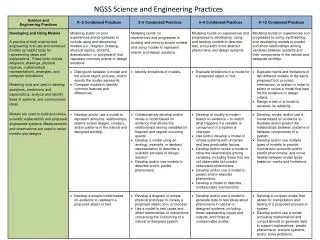
How does this look in the Classroom? 4-PS3-4. Apply scientific ideas to design, test, and refine a device that converts energy from one form to another. With a focus on the science content: With a focus on the engineering practice:
Engineering Design Activity • MS-ETS1-4. Develop a model to generate data for iterative testing and modification of a proposed object, tool, or process such that an optimal design can be achieved. Task: Develop a model car that will travel a minimum of 2 meters in a straight line using only the materials provided. Identify the criteria and constraints for the design. Test the design. Compare your results to others. Modify your design. Retest.