Understanding the Separation of Powers: The Legislative, Executive, and Judicial Branches of Government
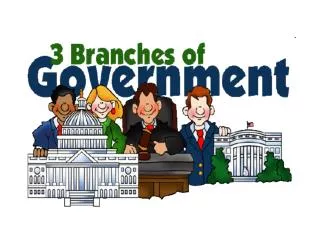
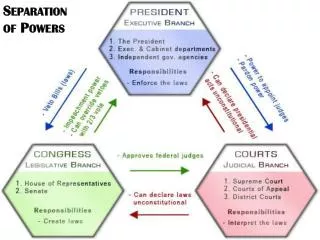
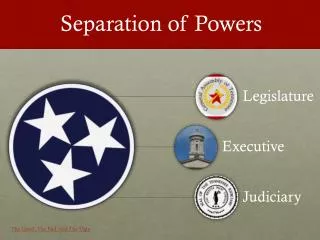
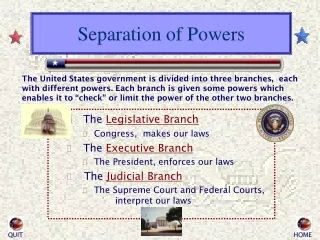
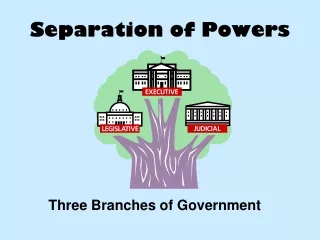
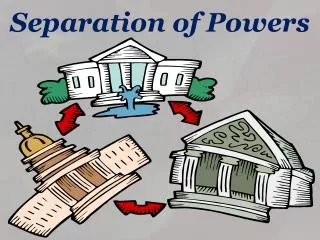
The United States government is divided into three branches: the Legislative, Executive, and Judicial. The Legislative Branch consists of Congress, divided into the House of Representatives (435 members, 2-year terms) and the Senate (100 members, 6-year terms). Congress makes laws, proposes amendments, and declares war. The Executive, led by the President (4-year term), enforces laws and oversees foreign relations. The Judicial Branch interprets laws through the Supreme Court, which can declare laws or executive orders unconstitutional. This system maintains checks and balances.

Understanding the Separation of Powers: The Legislative, Executive, and Judicial Branches of Government
E N D
Presentation Transcript
Congress Makes Laws Legislative Branch House of Representatives ( 435 members) Serves 2-year term Must be 25 years old and been a citizen for 7 years Can propose tax laws Can impeach the president & federal judges Can elect the president (in special cases)
Makes Laws Legislative Branch Senate( 100members) Serves 6-year term Must be 30 years old and been a citizen for 9 years Can approve presidential appointments Can ratify treaties w/ foreign gov’ts Can try the president & federal officials after impeachment Can elect vice president (in special cases)
Makes Laws Legislative Branch The House and Senate Together Can propose laws Can declare war Can override a president’s veto with a 2/3 vote Can propose amendments with a 2/3 vote
President, VP, Cabinet Enforces Laws Executive Branch President Serves 4-year term Must be 35 years old and been a citizen for 14 years Can approve or veto laws Makes treaties with foreign gov’ts Nominates judges to Supreme Court Appoints cabinet members Commander-in-Chief of military
Supreme & Federal Courts Interprets Laws Judicial Branch Supreme Court Justices Serves for life Can declare laws unconstitutional Can declare executive orders unconstitutional Can settle disputes between states Chief Justice presides over impeachment trial of the President