How Does DTF Transfer Printing Work
0 likes | 2 Vues
DTF transfer printing is one of the most flexible, beginneru2011friendly ways to decorate apparel and grow a merch business without investing in screen printing or DTG. This guide explains how DTF transfer printing in Los Angeles works step by step and how ZapDTF fits into that workflow for brands, creators, and print shops.


How Does DTF Transfer Printing Work
E N D
Presentation Transcript
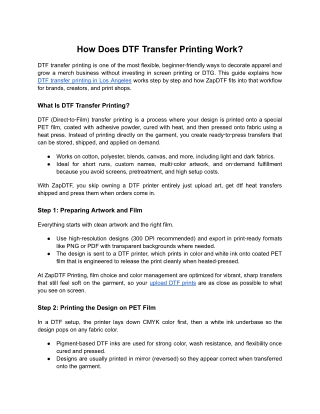
How Does DTF Transfer Printing Work? DTF transfer printing is one of the most flexible, beginner‑friendly ways to decorate apparel and grow a merch business without investing in screen printing or DTG. This guide explains how DTF transfer printing in Los Angeles works step by step and how ZapDTF fits into that workflow for brands, creators, and print shops. What Is DTF Transfer Printing? DTF (Direct‑to‑Film) transfer printing is a process where your design is printed onto a special PET film, coated with adhesive powder, cured with heat, and then pressed onto fabric using a heat press. Instead of printing directly on the garment, you create ready‑to‑press transfers that can be stored, shipped, and applied on demand. ● Works on cotton, polyester, blends, canvas, and more, including light and dark fabrics. ● Ideal for short runs, custom names, multi‑color artwork, and on‑demand fulfillment because you avoid screens, pretreatment, and high setup costs. With ZapDTF, you skip owning a DTF printer entirely just upload art, get dtf heat transfers shipped and press them when orders come in. Step 1: Preparing Artwork and Film Everything starts with clean artwork and the right film. ● Use high‑resolution designs (300 DPI recommended) and export in print‑ready formats like PNG or PDF with transparent backgrounds where needed. ● The design is sent to a DTF printer, which prints in color and white ink onto coated PET film that is engineered to release the print cleanly when heated‑pressed. At ZapDTF Printing, film choice and color management are optimized for vibrant, sharp transfers that still feel soft on the garment, so your upload DTF prints are as close as possible to what you see on screen. Step 2: Printing the Design on PET Film In a DTF setup, the printer lays down CMYK color first, then a white ink underbase so the design pops on any fabric color. ● Pigment‑based DTF inks are used for strong color, wash resistance, and flexibility once cured and pressed. ● Designs are usually printed in mirror (reversed) so they appear correct when transferred onto the garment.
This is the stage most brands and small shops outsource: instead of managing inks and heads yourself, you order finished dtf transfer printing from a partner like ZapDTF and use your heat press as the last step in the chain. Step 3: Applying and Curing Adhesive Powder While the ink on the film is still wet, a special hot‑melt adhesive powder is applied to all printed areas. The powder is what ultimately bonds the design to the fabric. ● Excess powder is shaken off so only the inked parts remain coated. ● The film goes into a curing oven or under a heat press (without closing fully) to melt the powder into a smooth adhesive layer, typically around 160–170°C for a short, controlled time. Correct curing is essential: under‑cured powder can lead to poor adhesion and peeling, while over‑curing can make the transfer brittle. ZapDTF uses calibrated curing profiles so transfers arrive ready to press with consistent results. Step 4: Heat‑Pressing the DTF Transfer to the Garment Once cured, the DTF transfer film is ready to use whenever you need it. The application is straightforward: ● Pre‑press the garment for a few seconds to remove wrinkles and moisture, which helps adhesion. ● Place the DTF transfer (print side down, film side up) where you want the design and press with the recommended temperature, pressure, and time commonly in the 280–350°F range depending on fabric. ● After pressing, you either cold‑peel or warm‑peel the film according to the transfer instructions then often do a quick second press for a softer hand and better durability. This means any shop with a good heat press can turn ZapDTF sheets into retail‑ready garments without learning a full printing workflow. Why DTF Transfer Printing Is So Popular DTF in Los Angeles has grown quickly because it solves many pain points that screen printing, vinyl and even DTG struggle with. ● Low minimums, high flexibility ○ You can print one shirt or hundreds without heavy setup costs, making DTF perfect for small brands, pop‑up drops, and made‑to‑order stores. ○ Designs with gradients, photos, and tiny details are handled in a single pass—no need to separate colors or cut vinyl. ● Broad material compatibility and durability
○ DTF works on many fabrics and colors, including cotton, polyester, blends, and some performance materials, and can handle repeated washing when properly pressed and cared for. ○ When cured and applied correctly, DTF transfers often rival screen printing for longevity, especially on everyday apparel. For shops that already own a press, partnering with ZapDTF turns that equipment into a versatile production line without the cost and learning curve of owning a DTF printer in Los Angeles. How ZapDTF Fits Into Your Workflow Instead of managing film, ink and powder in‑house, ZapDTF lets you plug into the DTF process at the easiest point: pressing. ● Upload art once, order single designs or gang sheets, and receive perfectly cured dtf heat transfers ready to apply. ● Use ready‑to‑press sheets to handle rush orders, sample runs, and long‑term designs without needing to re‑burn screens or keep printed stock in every size and color. For clothing brands, print shops and creators who want pro‑quality prints with less overhead, DTF transfer printing in Los Angeles with a reliable partner like ZapDTF Printing is one of the most efficient ways to grow.