Age of Discovery
150 likes | 287 Vues
The Age of Discovery (1394-1600) marked a transformative period as Europeans developed a fervent interest in Eastern goods, leading to the flourishing of trade centers like Genoa, Pisa, and Venice. Prince Henry the Navigator of Portugal pioneered ocean exploration, while Christopher Columbus's 1492 voyage to the New World changed history. The Treaty of Tordesillas divided the globe between Spain and Portugal, and the Columbian Exchange facilitated a transatlantic flow of goods and ideas. This era birthed new colonies shaped by race and ethnicity, leading to profound demographic shifts and the rise of slavery.


Age of Discovery
E N D
Presentation Transcript
Age of Discovery • 1394-1600 • Europeans had developed a taste for Eastern goods. • Trade centers like Genoa, Pisa and Venice flourished • Overland route was slow and difficult.
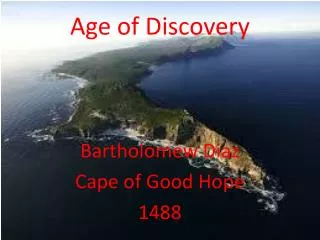
Portugal • Prince Henry the Navigator • Slave trade started • Sugar Plantations in Canary Islands. • Vasco da Gama the first to India via ocean.
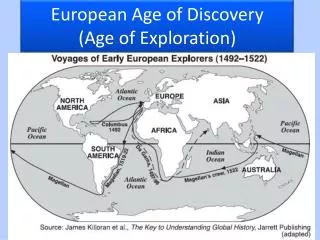
Christopher Columbus • Sails for Spain in 1492 • Three ships • Two are caravels • Ferdinand and Isabella • Convinced Earth is a sphere • Grossly underestimates distance to Asia
Christopher Columbus • San Salvador • Returned with 7 natives • Admiral of the Ocean Sea
Treaty of Tordesillas 1494 • Between Spain and Portugal • Line drawn on the map by the Pope. • Unsure of Geography
Ferdinand Magellan • First to circumnavigate the globe. • CC was wrong New World is not Asia. • New World becomes its own destination
Columbian Exchange • Transatlantic trade of goods, people and ideas that continues to this day. • Who does the Columbian Exchange favor?
Spanish Conquest • 1519 Cortes into Mexico • Pizzarro into Peru • God • Gold • Glory
People • All colonies in the western hemisphere are shaped by race and ethnicity. • All men are not equal.
People • Peninsulares: 1-2% • Creoles:1-2 % • Mestizos: 4-5%
People • Indian population falls by 90% by 1570. • African slaves would be necessary. • 1565 St. Augustine first permanent settlement in US.