Loggerhead Sea Turtle: A Deep Dive into an Endangered Marine Species
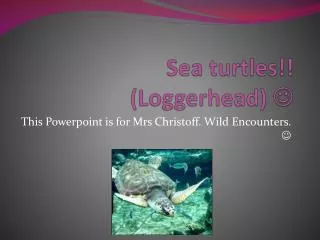
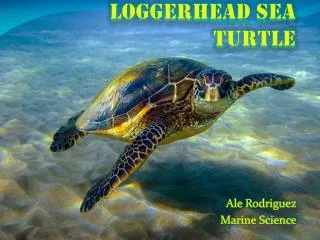
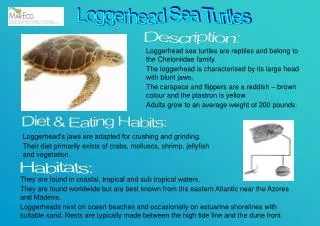
The Loggerhead Sea Turtle, an incredible olive-green inhabitant of the ocean, weighs around 300 pounds, with larger specimens reaching up to 1,000 pounds. They can grow up to 3 feet long and primarily feed on crabs, mollusks, snails, jellyfish, and sometimes fish. With a nesting behavior that produces 100-125 eggs every 14 days, they face threats from predators like raccoons and wild boars and human activities such as fishing. Efforts are underway to protect this species, which can live over 60 years, as only 6 of the 7 turtle species remain.

Loggerhead Sea Turtle: A Deep Dive into an Endangered Marine Species
E N D
Presentation Transcript
Loggerhead Sea Turtle By: Olivia
Biome • The loggerhead sea turtle lives in the ocean.
Color • The loggerhead is olive green.
Weight • The loggerhead sea turtle weighs about 300 pounds larger specimens weigh about 1,000 pounds.
Size • They can be 3 feet long.
Diet • Loggerhead sea turtles eat crabs ,mollusks ,snails, jellyfish, sometimes fish and eelgrass.
Offspring • 100-125 eggs every 14 flotsam. • Flotsam means every time they come up to lay their eggs.
predators • Raccoons try to eat the eggs so do wild boars. • Raccoons try to destroy the nest so do humans.
populations • 6 of the 7 species are left.
Why its endangered • Fisher men and women are catching them in fishing nets.
protection • Humans are trying to stop catching them in nets and setting them free.
Interesting facts • They can live up to 60 years or more. • They swim up along reefs ,coasts , and beaches. • they lay their eggs on beaches and dig a hole then lay their eggs.