Download
1 / 11
110 likes | 210 Vues
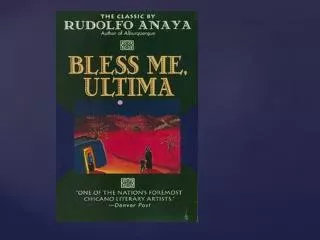
Rudolpho Anaya's "Bless Me, Ultima" follows Antonio's journey through the contrasting farmlands and wild plains of his family, exploring themes of identity, faith, and culture. As a bildungsroman, the novel delves into Antonio's search for self-discovery and connection to his heritage. Through the guidance of the curandera Ultima, Antonio navigates the influences of Aztec mythology, magical realism, and the legend of the Golden Carp. The novel also highlights the significance of individual moral codes and cultural beliefs in shaping society.

E N D
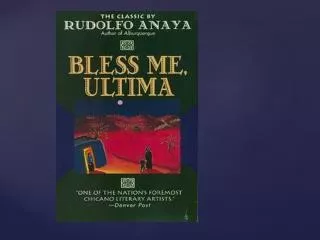
Author Rudolpho Anaya
The setting represents two opposing forces: the farmlands of Tony’s mother’s family . . . and the Llano, the wild plains of his father’s family who are vaqueros.
Bless Me, Ultima can be categorized as a bildungsroman—a literary term for a coming-of age story, in which the protagonist progresses from child to adult.
A curandera is a traditional folk healer or shaman in Hispanic America, who is dedicated to curing physical and/or spiritual illnesses.
Hero Quest – Antonio searches for his faith and his identity.
Magic Realism: Supernatural elements occur along side realistic events. Legend of the Golden Carp
Pathetic Fallacy: Giving human emotions to nature. Rio Grande is a character in the novel.
Themes: • Individuals must discover their own moral codes, which may mean questioning the beliefs of their families and society. • Cultural beliefs and superstitions can have a great impact on society and individuals.