Hearing Conservation Program
Learn about the Navy's Hearing Conservation Program, which aims to prevent hearing loss due to noise exposure through various elements like engineering controls, personal protection, and medical monitoring.

Hearing Conservation Program
E N D
Presentation Transcript
Noise • Any unwanted sound--created by many different sources: • Traffic • Industrial equipment and tools • Music • Gunfire exercises • Ventilation • Excessive noise--over time and certain levels--can cause hearing loss
Noise Exposure • Determined by: • Duration of exposure • Type of noise • Continuous • Impulse • Intensity • Frequency
Causes of Hearing Loss • Age • Disease (Middle or Inner Ear) • Trauma • Drugs • Noise exposure
Damage to the Ear • Outer ear-- • Catches dirt and particles in the canal that contains cerumen or wax • Middle ear-- • Has bones and ear drum which can rupture from sudden high sound pressure levels • Inner ear-- • Has cochlea with tiny hair cells connected to nerves. Damage is irreversible Middle ear Cochlea
Terminology • Frequency • Measured in hertz (Hz) or cycles per second • Determines how high or low the pitch sound • Intensity • Measured in decibels (dB) • Determines how “loud” a noise sounds
Other Information • Ability to hear well depends on • Pitch of the sound • Age of the individual • Distance from noise source • Previous noise exposures • Environment (surroundings)
Other Information • Sound level meters used to measure noise levels • 20 Decibels (dB)--faint sound (like a quiet bedroom) • 150 Decibels (dB)--F-14 at takeoff on flight deck • Navy Industrial Hygiene Officers (IHO) conduct noise surveys
Program Objective • The objective of the Hearing Conservation Program is to prevent hearing loss as a result of exposure to hazardous noise. How would YOU like to own this?
Program Elements • Identifying noise hazardous areas • Engineering controls to reduce the hazard • Posting of noise hazardous areas • Providing hearing protection to personnel • Medical monitoring (audiograms) • Education and training
Identifying Noise Hazardous Areas • Limits for continuous noise exposure • DOD = 85 dB • OSHA = 90 dB • Impact (Impulse) noise limit = 140 dB • 84 dB or less--OK for personnel 8 hours a day, five days a week with no ill effects. • Above 84 dB--Navy considers noise hazardous
Identifying Noise Hazardous Areas • Sound level surveys conducted to determine which spaces routinely have • Continuous noise >84 dB • Impact noise >140 dB • Survey documents retained onboard • Readings repeated after overhaul or if new equipment added/changed • Readings reviewed every 2 years as part of IH survey
Engineering Controls • Accomplished as part of • New construction • Overhaul • SHIPALT • IMA • Applied to submarines to reduce waterborne noise
Engineering Controls • Noise can be decreased by changes in design or imposing controls • Damping material or sound curtains around equipment • Acoustical tiles for classrooms • Rubber insulating pads at metal-to-metal interface • Moving noise equipment to isolated location • Engineering controls must be considered FIRST, prior to resorting to PPE
Posting Noise Hazard Signs • Used when engineering controls do not work, or are not feasible • Use Yellow and Black signs to mark hazards • Large signs for entire areas • Small stickers for individual equipment • Post areas as DOUBLE Hearing Protection Required if sound levels >104dB
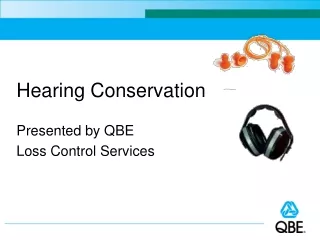
Personal Protection • Used as last resort--when exposures cannot be controlled by any other means • Ear plugs and muffs • Mechanically block noise from ear • Rated for specific Noise Reduction Rating (NRR)--reduce decibel levels reaching the ear by the number listed on the package
Personal Protection • Ear plugs • Fit into ear canal • Fitted/Flanged types issued by Medical • Disposable foam plugs don’t require fitting--also have highest NRR (about 30dB) • Ear muffs • Fit over outer ear • Have NRR of 24-28 dB • Ear caps--like plugs with a head band--NRR of about 22 dB
Personal Protection • Double protection • Required when continuous sound levels >104dB • Use combination of ear plugs and ear muffs • Must be kept clean and in good condition • Dirty plugs may cause infections • Muffs with hardened seals DO NOT protect
Medical Monitoring • Baseline and routine testing required for all personnel working in noise hazardous areas • All naval personnel given baseline audiogram when entering the service • Annual audiograms given to personnel assigned work in noise hazardous areas • Termination audiograms given to personnel when leaving the service