Download
1 / 11
110 likes | 239 Vues
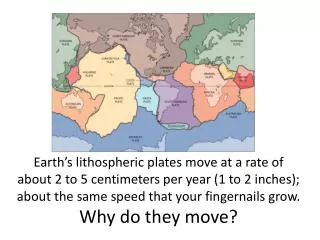
This lesson explores the concept of tectonic plates, which divide the Earth's crust, and how they move. Through an interactive jigsaw activity, students will learn the major plate boundaries and the driving forces behind plate movement, including convection currents in the mantle. Additionally, the lesson covers the top 10 deadliest volcanoes and biggest earthquakes, illustrating the impact of tectonic activity. By the end, students will be able to explain the evidence for continental drift and the reasons behind plate movements.

E N D
Key Question: What are ‘plates’ and how do they move?
Learning Objectives: To know the crust is divided into ‘plates’ To be able to explain how they move
Look carefully at your completed jigsaw. It shows the major plate boundaries. Using a RED pencil make the plate boundaries clearly
Top 10 deadliest volcanoes: • Tambora, Indonesia • Krakatau, Indonesia • Pelee, Martinique • Ruiz, Columbia • Unzen, Japan • Laki, Iceland • Galunggung, Indonesia • Vesuvius, Italy • Etna, Italy • Top 10 biggest earthquakes: • Chile • Prince William Sound, Alaska • Aleutian Islands • Kamchatka • Sumatra, Indonesia • Ecuador • Aleutian Islands • Sumatra, Indonesia • India/China border • Kamchatka
Evidence to support Continental Drift: Fossils match Jigsaw fit of land masses Flightless Birds Rocks also match – the rocks in Scotland match those found in Newfoundland.
Why do the plates move? Crust Convention Currents Mantle
Plenary In pairs, using your jigsaw and knowledge learnt today, explain to your partner how plates move. Wish 2