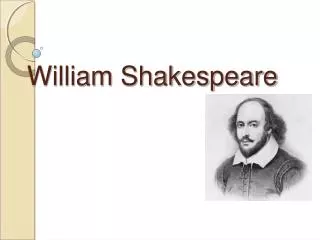
William Shakespeare
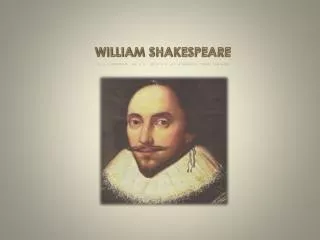
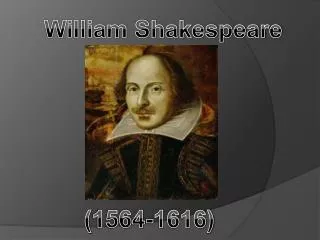
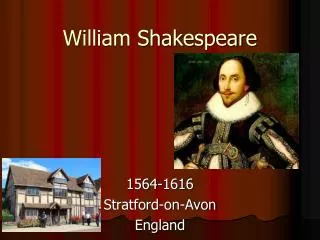
The Renaissance marked a profound cultural rebirth in Europe, reigniting interest in classical arts, literature, and government. It was characterized by experimentation, religious upheaval, and warfare. William Shakespeare, a central figure of this era, was baptized on April 26, 1564. He married Anne Hathaway, had three children, and began his theatrical career in 1592. Renowned for his sonnets and plays, Shakespeare remains a literary icon despite debates over the authorship of some works. His legacy includes the Globe Theater and the enduring influence of his diverse play genres.
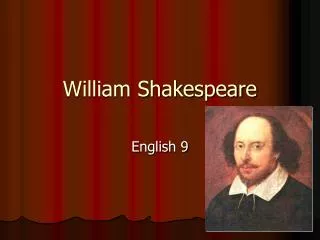

William Shakespeare
E N D
Presentation Transcript
William Shakespeare English 9
Renaissance • What can you tell me about the Renaissance? • The Renaissance was a time of rebirth. Europeans experienced a reawakening of interest in the classics--government, literature, art, and thought. It was a time of experimentation. It was a time of religious upheaval…and it was a time of war.
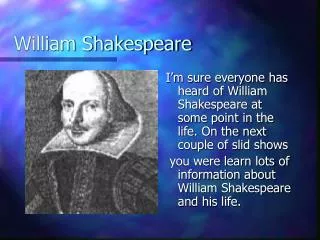
Shakespeare’s Life • Baptized April 26, 1564 • At 18, married Anne Hathaway • Had three children • 1592 started pursuing a career in theater • By 1593, he was a well-known actor and playwright • Wrote sonnets and plays…some are considered the best ever written • Some say he didn’t write it all • The Christopher Marlowe & Francis Bacon theories • Died April 23rd, 1616
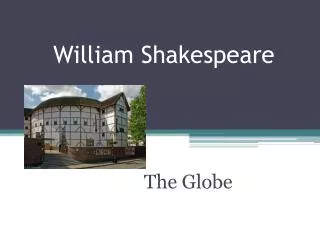
Globe Theater • Opened in 1599 • Burned down in 1613 from a cannon shot during a performance of Henry VIII.
Literary Terms • Blank Verse: unrhymed iambic pentameter • Iambic Pentameter: five beats of alternating unstressed and stressed syllables; ten syllables per line. • 'So fair / and foul / a day / I have / not seen' • 'The course / of true / love nev/er did / run smooth‘ • Metaphor, simile, personification, foil, theme, symbolism… • Wow, these seem familiar!
Structure of a Five-Act Play • Act I: Introduction • Act II: Rising Action • Act III: Turning Point • Act IV: Falling Action • Act V: Resolution/Catastrophe • Presents the event that resolves, or ends, the central conflict • In a tragedy, this Act is the catastrophe because it marks the ultimate fall of the central character
Types of Shakespearean Plays • Tragedies • Comedies • Histories • Shakespeare did not put his plays in categories…Scholars did
Tragedies • The Greek philosopher, Aristotle, defined tragedy as “the noblest and most serious, dignified and important form of drama.” • Tells the story of the fall of a person in high status • Death is often the result at the end of the play
Comedies • Idea evolved from early Greek comedies • All types of humor used: appropriate and inappropriate • Shakespeare’s comedies: • full of fun, irony, and plays on words • Lots of disguises, mistaken identities, and unusual (and sometimes hard to follow) plots
Histories • Included events/people from history (go figure, huh?) • However…it was loosely based on those events and/or characters • Were a mix of tragedy and comedy
Oh…wait • Some folks say there were more types of plays: • Romance • Roman • …but others feel that they fit into the three main categories anyway
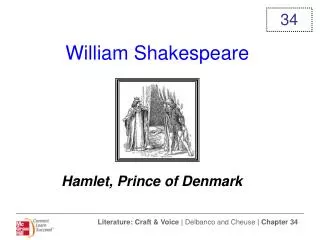
Romeo and Juliet • Tragedy • What does that tell you? • What do you know about the play?