OpenShift Deployment Models Strategy for Scalable Infrastructure
0 likes | 3 Vues
Explore OpenShift deployment models strategy to choose the right on-prem, cloud, or hybrid approach for scalable, secure, and high-performance applications.


OpenShift Deployment Models Strategy for Scalable Infrastructure
E N D
Presentation Transcript
OpenShift Deployment Models Choosing the Right Red Hat OpenShift Deployment Strategy
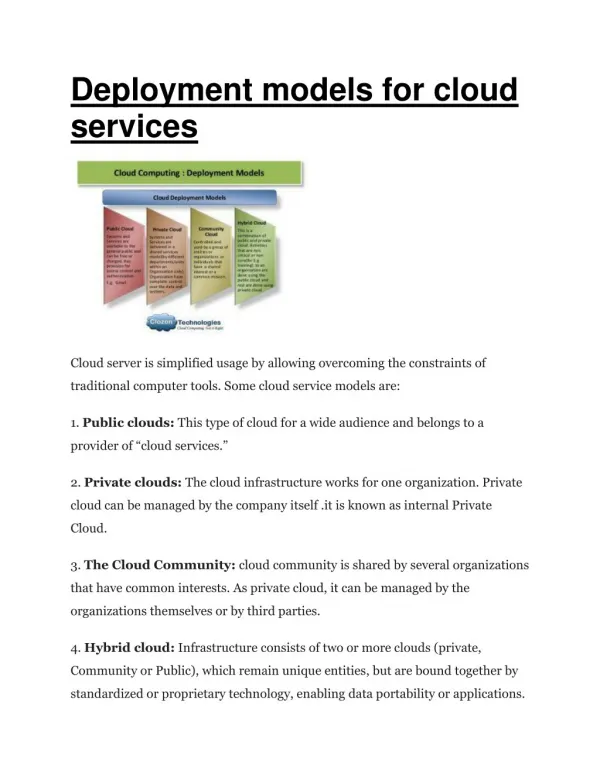
Overview of Deployment Options On-Prem Cloud Hybrid Deployed in private data centers or bare metal for total infrastructure control. Running on AWS, Azure, or GCP for rapid scalability and innovation. Combination of clusters for phased migration and business continuity.
OpenShift On-Prem Deployment Full Infrastructure Control Deploy OpenShift in private data centers or bare metal to achieve maximum control over sensitive workloads. Strong compliance and data residency Low-latency for critical systems Ideal for Banking, Healthcare, Government
OpenShift Cloud Deployment Elasticity and Innovation Running OpenShift on AWS, Azure, or Google Cloud provides rapid scalability and lower infrastructure management overhead. It allows teams to focus on customer-facing applications and SaaS platforms with faster iteration cycles.
OpenShift Hybrid Deployment Best of Both Worlds A combination of on-prem and cloud OpenShift clusters enables enterprises to keep sensitive workloads on-prem while using the cloud for burst scaling. Phased cloud migration Disaster recovery and resilience Long-term business flexibility
Enterprise Use Cases & Scenarios Regulated Core Systems Digital Platforms & APIs On-prem OpenShift ensures high security for core financial and governmental databases. Cloud OpenShift enables developers to scale user-facing web and mobile applications globally. AI, Analytics & DR Business Outcomes Hybrid OpenShift allows for large-scale data processing in the cloud with data stored securely on-prem. Faster delivery, improved resilience, and optimized infrastructure costs across all models.
Challenges & Best Practices Overcoming Complexity: Standardize cluster architecture and implement strong governance to manage platform complexity across environments. Bridging Skill Gaps: Invest in training or leverage OpenShift Consulting Services to navigate networking and security configurations. Optimized Operations: Continuous monitoring and automated CI/CD pipelines are essential for secure container orchestration at scale.
Choosing the Right Model The right OpenShift model depends on compliance, scalability, and business goals. Hybrid deployment often offers the most long-term flexibility for enterprises. Red Hat OpenShift Consulting Services






![[C] E-Business Strategy/ Models](https://cdn5.slideserve.com/9521207/c-e-business-strategy-models-dt.jpg)