Download

1 / 10
1 likes | 6 Vues
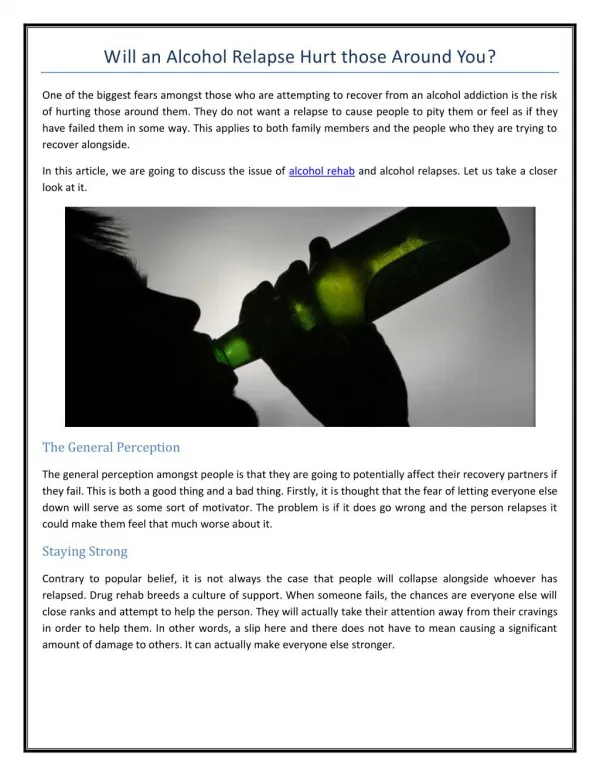
Relapse prevention aims to alter excessive or addictive behaviour patterns in those with alcohol addiction. Recovery from addiction takes time, and relapses can sometimes happen. Experiencing a relapse is not a sign of 'weakness' or 'failure'. Rather they are signs that old coping methods must be replaced with new ones. It is a common period of the healing process. A single drug for which rehabilitation can be very difficult is alcohol, and relapse is prevalent <br>

E N D
How to Prevent Alcohol Relapse secondnewlife.com
Table of Contents • What is Alcohol Relapse • What Are Some Trigger for Alcohol Relapse • Types of Alcohol Relapse • Tips to Prevent Alcohol Relapse • The Top 10 Relapse Prevention Skills • The Role of Treatment in Relapse Prevention • Conclusion secondnewlife.com
What is AlcoholRelapse? Alcohol relapse occurs when an individual returns to drinking after a period of abstinence. It is common and challenging aspect of the recovery journey with rates suggesting that around two- thirds of individuals with alcoholdependence relapse within the first six months. Its happens commonly because stress, anxiety, or depression can lead to a relapse in the harmful behaviour. According to data, 40 to 60% of persons with substance abuse disorder relapse. Drinking one time in a while is not cause to step back and start all over again. secondnewlife.com
What Are Some Trigger for Alcohol Relapse Relapse can be triggered by various factors, including unresolved emotions, stress, exposure to past drinking environments, and inadequate social support. These triggers can lead to a cascade of warning signs that may indicate an impending relapse. • Emotional Trigger , such as bottling up feelings as failing to engage in self-care, can initiate the early stages of relapse. • SocialFactors, including minimal support system or exposure to past drinking cues, can also contribute to relapse risks. secondnewlife.com
Types of Alcohol Relapse • Emotional Relapse :This emotional disorder can lead to relapse if left untreated. if they are not considering drinking. Then a person may come across stress, anxiety or even depression during the second stage.Some symptoms , Stress, Emotional Instability, Sleeplessness, Anger or irritability, Unhealthy eating habits. • Mental Relapse :When people start to think about alcohol more, they idealizing their previous drinking habits or trick themselves into believing they can "just have one drink". Symptoms, Urge to drink, Lying , Hanging out with old friends or missing meetings, Imagining using. • Physical Relapse : During this stage, it is common to experience feelings of guilt, frustration and shame. This is normal and may help the individual recognize and change their behaviors. However, it is also important to not focus on these negative emotions and find ways to forgive yourself. Just to socialize, Thinking they can avoid the temptation, Purchasing alcohol in case they choose to consume it. secondnewlife.com
Tips to Prevent Alcohol Relapse • Expanding & Diversifying Your Network • Develop Healthy Coping Mechanisms • Recognise & Stay Away From • Following Planned Routine • Explore Counseling & Therapy Options • Personalized Relapse Prevention Strategies secondnewlife.com
The Top 10 Relapse Prevention Skills • Self-Care • HALT • Mindfulness Meditation • Know Your Triggers • Join a Support Group • Grounding Techniques • Deep Breathing • Make An Emergency Contact List • Play The Tape Through • Get Help secondnewlife.com
The Role of Treatment in Relapse Prevention Relapse may be an indication that care needs t be changes or retrated . It is essential to continue treatment for the duration of the program. Professional treatment can help with controlling both the physical & mental aspects of addiction for support Recovery. Cognitive behavioral therapy, a foundation of modern addiction treatment is a well-established therapeutic approach that focus on identifying and changing negative thought patterns and behaviors. It has gained prominence as an effective methods for addiction treatment and relapse prevention. So many parents use this therapy. After completing an inpatient or residential program this can include living in sober living facility or going to 12-step meetings. secondnewlife.com
Conclusion We learn and gain knowledge about preventing alcohol relapse. We discussed all the important factors, types of alcohol relapse, tips to prevent alcohol relapse, top 10 relapse prevention skills, some trigger for alcoholrelapse and the role of treatment in relapse prevention. Relapse risk can be signification decreased by incorporating these relapse prevent strategies into your daily routine. They the main things you must look for as you recover. It can be not easy, though, and we understand that. secondnewlife.com
THANK YOU secondnewlife.com