LinkedIn Ads Statistics 2026
LinkedIn has become the most trusted platform for B2B advertising because it connects brands directly with professionals, decision-makers, and business influencers. In 2026, advertisers are prioritizing LinkedIn Ads not for vanity metrics, but for measurable outcomes such as qualified leads, higher engagement, and strong return on ad spend.

LinkedIn Ads Statistics 2026
E N D
Presentation Transcript
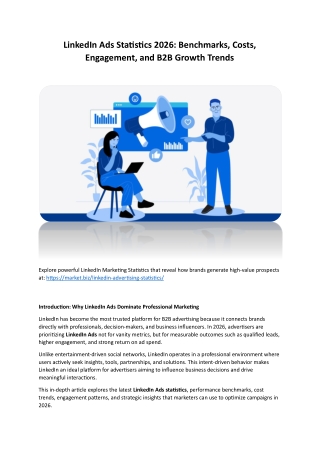
LinkedIn Ads Statistics 2026: Benchmarks, Costs, Engagement, and B2B Growth Trends Explore powerful LinkedIn Marketing Statistics that reveal how brands generate high-value prospects at: https://market.biz/linkedin-advertising-statistics/ Introduction: Why LinkedIn Ads Dominate Professional Marketing LinkedIn has become the most trusted platform for B2B advertising because it connects brands directly with professionals, decision-makers, and business influencers. In 2026, advertisers are prioritizing LinkedIn Ads not for vanity metrics, but for measurable outcomes such as qualified leads, higher engagement, and strong return on ad spend. Unlike entertainment-driven social networks, LinkedIn operates in a professional environment where users actively seek insights, tools, partnerships, and solutions. This intent-driven behavior makes LinkedIn an ideal platform for advertisers aiming to influence business decisions and drive meaningful interactions. This in-depth article explores the latest LinkedIn Ads statistics, performance benchmarks, cost trends, engagement patterns, and strategic insights that marketers can use to optimize campaigns in 2026.
LinkedIn’s Expanding Advertising Ecosystem Professional User Base with Buying Influence LinkedIn’s global user base includes executives, managers, founders, consultants, and specialists across industries. A large percentage of these users are directly or indirectly involved in purchasing decisions within their organizations. For advertisers, this means access to an audience that is not only relevant but also commercially valuable. Campaigns can be targeted by job title, company size, industry, seniority, skills, and interests — creating unmatched precision in ad delivery. Global Reach with Local Targeting LinkedIn operates across more than 200 countries and territories, allowing brands to run both global and region-specific campaigns. This balance of scale and precision makes it effective for companies expanding into new markets while maintaining relevance. Key LinkedIn Ads Performance Benchmarks Click-Through and Engagement Patterns Ads that present value in the form of insights, reports, or expert knowledge consistently achieve better click-through rates than promotional ads. Professionals are more likely to engage with content that helps them solve problems or gain knowledge. Creative clarity also plays a major role. Clean visuals, concise headlines, and professional design improve engagement significantly compared to cluttered creatives. Lead Conversion Effectiveness LinkedIn’s native lead capture forms reduce friction by allowing users to submit their details without leaving the platform. This results in higher completion rates compared to external landing pages. Leads generated through LinkedIn often match ideal customer profiles closely, making them more useful for sales teams and improving conversion potential. Understanding LinkedIn Advertising Costs in 2026 Why Cost Per Click Is Premium LinkedIn’s cost per click is typically higher than many other platforms because advertisers are paying to reach professionals with real purchasing power. This premium audience naturally increases CPC but also improves lead quality. Cost Per Lead vs Cost Per Click While CPC may appear high, cost per qualified lead often remains competitive because fewer clicks are wasted. Advertisers find that quality traffic reduces overall acquisition costs and improves ROI. Factors Influencing Ad Costs Ad relevance, audience competition, targeting precision, and bidding strategy all affect costs. Campaigns with strong relevance scores and focused audiences typically achieve better cost efficiency.
Ad Formats That Deliver Results Sponsored Content for Awareness and Engagement Sponsored posts integrated into the feed generate strong engagement because they resemble organic content. Posts that educate and inform perform better than sales-focused creatives. Video Ads for Professional Storytelling Short videos explaining industry challenges, case studies, or solutions are gaining popularity. Video ads capture attention quickly and improve brand recall among professionals. Carousel and Document Ads for Deeper Interaction Carousel ads allow storytelling across multiple frames, while document ads enable users to preview valuable content directly in the feed. These formats improve time spent on ads and increase user interest. Engagement Trends That Influence Campaign Success Engagement is highest when ads are shown during working hours, particularly midweek. Headlines addressing professional pain points attract more attention than generic messaging. Users respond positively to ads that provide immediate value, such as guides, research findings, and expert insights. This value-driven approach leads to better interaction and stronger brand perception. Retargeting and Funnel Optimization LinkedIn allows advertisers to build retargeting audiences based on ad engagement, video views, and website visits. These warm audiences convert at higher rates when shown sequential ads tailored to their interests. This multi-touch approach improves overall campaign effectiveness and reduces acquisition costs over time. ROI and Business Impact of LinkedIn Ads Despite higher CPC, LinkedIn often delivers strong return on ad spend because of lead quality and conversion efficiency. Businesses report that LinkedIn leads require less nurturing and have higher deal potential. Beyond immediate conversions, LinkedIn ads also contribute to brand authority and trust, which influences long-term buying decisions. Strategic Best Practices for 2026 Successful advertisers on LinkedIn focus on: • Value-driven content rather than direct selling • Precise audience segmentation • Continuous creative testing and optimization • Using multiple ad formats across funnel stages These strategies are aligned with current performance statistics and user behavior trends on the platform.
Future Outlook for LinkedIn Advertising LinkedIn’s advertising platform is expected to continue evolving with better automation tools, AI- driven optimization, and new interactive ad formats. As more businesses shift toward professional marketing environments, LinkedIn will remain a central channel for B2B advertising growth. Conclusion: LinkedIn Ads as a Strategic Investment The LinkedIn Ads statistics for 2026 demonstrate that the platform is more than just a professional network — it is a performance-driven advertising engine. With precise targeting, strong engagement, and high-quality leads, LinkedIn offers measurable value for businesses seeking sustainable growth. Marketers who understand these benchmarks and apply data-driven strategies will continue to achieve superior results through LinkedIn advertising.