Preparing for Pet Surgery with Confidence
Facing the possibility of surgery for a pet can be daunting, especially for owners who have never <br>navigated this kind of experience before. From routine procedures to more complex interventions, <br>understanding the process can help ease anxiety and support better decision-making.

Preparing for Pet Surgery with Confidence
E N D
Presentation Transcript
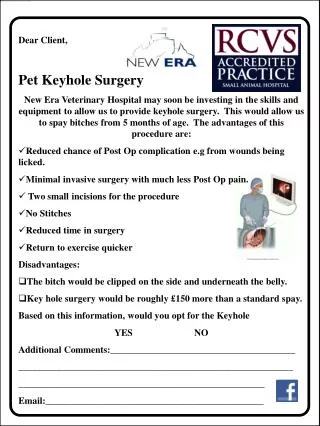
Preparing for Pet Surgery with Confidence Facing the possibility of surgery for a pet can be daunting, especially for owners who have never navigated this kind of experience before. From routine procedures to more complex interventions, understanding the process can help ease anxiety and support better decision-making. Surgical care in veterinary medicine ranges widely. Some procedures, like spaying, neutering, or dental extractions, are quite common. Others, such as tumor removals or orthopedic repairs, require advanced equipment and expertise. Regardless of the type, each surgery begins with a thorough diagnosis, often including blood tests, physical exams, and imaging. Local clinics offering Pet Surgery Mississauga services are typically equipped with modern tools and trained staff to ensure safety and comfort for pets at every stage. Before surgery, pets undergo pre-anesthetic assessments to check organ function and reduce the risk of complications. These tests guide decisions around anesthesia, which is closely monitored throughout the procedure. While anesthesia can make pet owners nervous, modern monitoring tools and experienced veterinary teams significantly reduce the risks. Heart rate, oxygen levels, breathing, and temperature are all carefully tracked during the operation. Most pets recover smoothly and are monitored during the initial recovery phase before heading home. After surgery, proper post-operative care is essential. Pet owners are typically given clear instructions, including how to administer medications, limit physical activity, and monitor signs of discomfort or infection. Follow-up visits may also be scheduled to ensure healing is progressing as expected. Choosing a provider for Veterinary Surgery Mississauga should involve more than convenience. Ask about the veterinarian’s experience with the specific procedure, the clinic’s recovery protocols, and what support is available in case of complications. In some cases, pets may be referred to a specialist, especially for complex or high-risk surgeries. In situations where surgery is optional, your veterinarian may offer alternative treatments such as rehabilitation, medication, or lifestyle changes. Each case is different, and factors like your pet’s age, breed, and overall health play an important role in the decision. While the idea of pet surgery can be stressful, understanding the process and knowing what questions to ask can make it far more manageable. With the right care and preparation, many pets go on to live healthier, more comfortable lives after surgery. Clarkson Lakeshore Animal Hospital provides surgical services in a supportive and professional environment. Their team guides pet owners through the process with clarity and compassion, ensuring pets receive the care they need before, during, and after surgery.