0 likes | 1 Vues
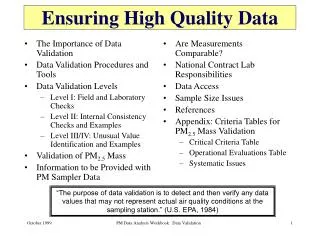
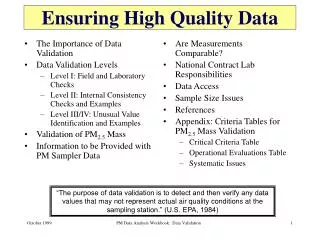
Ensuring high data quality is essential for the success of clinical trials. This guide explores the best practices that help sponsors, CROs, and research teams maintain accurate, reliable, and regulatory-compliant data. From effective data management planning and robust monitoring strategies to using modern EDC systems and real-time validation checks, learn how to improve data integrity at every stage of the trial. Discover practical techniques to minimize errors, enhance oversight, and ensure trustworthy outcomes that support successful submissions.
E N D
Best Practices for Ensuring Data Quality in Clinical Trials Overview In clinical research, few things are more important than reliable data. High‑quality data to decide patient care or regulatory approval. But achieving high data quality is often easier said than done. Errors can creep in at many stages of data collection, entry, storage, or analysis potentially compromising entire studies. Implementing robust best practices is essential for ensuring data quality in clinical trials because they help safeguard the integrity and reliability of the data being collected, processed, and analyzed. In this blog, we explore how researchers and study teams can safeguard data quality in clinical trials, minimize risk, and support valid, trustworthy conclusions. ensures that trial results are credible, reproducible, and most importantly safe when used Ensuring Data Quality in Clinical Trialsisn’t just a compliance checkbox; it’s the backbone of scientific integrity. Standard operating procedures (SOPs) further guide the team to follow consistent processes, reducing variability in data handling. Through thoughtful planning, rigorous oversight, and smart use of technology, clinical trials can produce data that meet ethical, scientific, and regulatory standards, ultimately benefiting patients and advancing medical science.
Why Data Quality Matters Before diving into practice, it helps to understand why data quality is so vital. Poor-quality data can lead to invalid conclusions, flawed drug safety or efficacy assessments, and even regulatory rejection. According to experts, maintaining data integrity in clinical research is not optional — it is fundamental to protecting subjects, preserving trust, and ensuring regulatory compliance. Moreover, high-quality data supports reproducibility: future studies or meta-analyses depend on clean, well-documented datasets. When data is incomplete, inconsistent, or erroneous, it undermines confidence in outcomes and may require additional studies increasing cost, time, and risk. •Wrong conclusions about the effectiveness of a treatment •Misunderstanding of drug safety, which can put patients at risk •Rejection of a study by regulators, delaying approval and further research Experts agree that maintaining data integrity in clinical research is crucial. It's not optional it is essential for: •Protecting the safety of trial participants •Building trust in the research process •Meeting regulatory standards Additionally, high-quality data ensures that results can be trusted and repeated. Future studies or reviews (meta-analyses) rely on well-maintained, accurate data. If data is incomplete, inconsistent, or wrong, it can: •Lead to doubts about the study’s results •Require new studies to fill in gaps, which adds time, cost, and risk Issue Impact Incomplete or Inconsistent Data Erroneous Data Low-Quality Data Doubts about results and need for new studies Increased cost and risk of failure Delayed approval or rejection by regulators By ensuring good data quality, researchers can make sure their findings are reliable, helping to save time, reduce risks, and build trust in the clinical trial process.
Core Principles: The Foundation of Quality One widely used framework for ensuring data quality in clinical trials is the ALCOA++ principle. This set of guidelines helps ensure that data is: ➢Attributable: You should be able to trace data back to the person who entered or changed it. ➢Legible: Data must be clear and easy to read. ➢Contemporaneous: Data should be recorded at the time it happens, not later. ➢Original: The data should reflect what was originally observed, without alterations. ➢Accurate: Data must be correct and free from errors. ➢Consistent: Data should match across different parts of the study or database. ➢Complete: All required data must be collected and recorded. ➢Enduring: Data should last over time without being corrupted or lost. ➢Available when needed: The data must be easy to access whenever required. ➢Traceable: There should be a complete record of any changes made to the data. In practice, this means: ➢Attributable: You should know exactly who entered or changed the data. ➢Legible: Records must be easy to read and understand. ➢Contemporaneous: Data should be recorded as soon as an event occurs, not later. ➢Original: Only original observations are recorded, no alterations. ➢Accurate: Every entry must be correct and consistent throughout the trial. ➢Consistent: Data across all records should be the same, with no conflicting information. ➢Complete: Ensure all required data points are recorded. ➢Enduring: Data should remain intact and uncorrupted over time. ➢Available when needed: Ensure data is accessible when researchers or regulators need it. ➢Traceable: Every change made to the data should be tracked, with a full record of who made the changes and why.
Why ALCOA++ Matters Principle What It Means Why It's Important Helps ensure accountability and traceability. Prevents confusion and errors in interpretation. Ensures real-time accuracy and reduces mistakes. Preserves the authenticity of the data. Ensures the data reflects true observations. Prevents conflicts and errors in results. Avoids missing data that could impact results. Prevents data loss and corruption. Makes data readily available for analysis and review. Maintains an audit trail for accountability. You can trace the data to the person who entered it. Data must be clear and easy to read. Data is recorded when it happens, not later. Only the original data is recorded. Data is correct and free from mistakes. Data matches across different parts of the study. Attributable Legible Contemporaneous Original Accurate Consistent Complete All necessary data is recorded. Enduring Data stays intact over time. Available when needed Data is easy to access whenever required. Any changes made to the data are documented. Traceable By following these principles, clinical trials can ensure their data is reliable, verifiable, and meets all regulatory requirements. These practices build a strong foundation for high quality data that researchers and regulators can trust. Best Practices to Ensure Data Quality in Clinical Trials Here are some effective practices, based on guidelines and industry standards, to ensure high-quality data during clinical trials: 1. Define a Clear Data Collection Plan & Collect Only What Matters ➢Identify essential data: Collect only what is necessary for the study’s goals.
➢Avoid over-collecting: Collecting too much data can cause confusion and errors. ➢Focus on critical data: Only collect data that is directly relevant to safety and study results. ➢Design user-friendly forms: Use clear, easy-to-fill forms like Case Report Forms (CRFs) or electronic CRFs (eCRFs). ➢Ensure consistency: Well-designed forms help avoid incomplete or inconsistent data. 2. Implement Robust Clinical Trial Data Management (CDM) Systems ➢Use electronic systems: Implement Electronic Data Capture (EDC) or Clinical Data Management Systems (CDMS). ➢Automate data capture: These systems reduce errors from manual data entry. ➢Real-time checks: Systems perform automatic data validation, improving data quality. ➢Use standardized formats: Formats like CDISC help ensure data consistency and ease of sharing. ➢Audit trails: Systems should track all data changes, ensuring transparency and accountability. 3. Establish Standard Operating Procedures (SOPs) & Governance ➢Create clear SOPs: SOPs ensure everyone follows the same steps for data collection and management. ➢Assign roles and responsibilities: Define who does what, from data entry to audits. ➢Ensure regular reviews: Regular audits and reviews ensure SOPs are followed consistently. ➢Foster a quality culture: Data quality should be a shared responsibility across the team. 4. Use Risk-Based Monitoring & Clinical Trial Monitoring Strategies ➢Prioritize critical data: Focus on high-risk data points that impact the trial’s success. ➢Track trends and anomalies: Monitor for patterns or inconsistencies in the data. ➢Remote monitoring: Use technology to monitor data in real-time, without needing to be on-site.
➢Efficient auditing: Regular checks can catch data issues early and ensure accuracy. 5. Perform Regular Quality Control, Cleaning & Audit Trails ➢Data cleaning: Regularly check for missing values or errors during the trial. ➢Fix inconsistencies: Identify and correct issues before they affect the results. ➢Audit trails: Track all changes made to the data, including who made them and when. ➢Support compliance: Audit logs help meet regulatory standards during inspections. Why These Practices Matter Practice Benefit Clear data collection Reduces errors and confusion Ensures real-time validation and accuracy Keeps processes consistent and reliable Focuses resources on critical data Ensures data remains accurate throughout Electronic Data Management Standard Operating Procedures Risk-based Monitoring Regular Data Cleaning The Role of Regulatory Compliance in Safeguarding Data Quality Data quality in clinical trials is closely linked to regulatory compliance. In simple terms, regulatory bodies (like the FDA or EMA) require that the data collected during a clinical trial is accurate, complete, and verifiable. This means that the data must be trustworthy and free from errors or gaps. In practice, this means following specific guidelines, like Good Clinical Practice (GCP), which sets standards for how data should be managed. If the data is not of high quality and doesn’t meet these standards, it can result in regulatory rejection. For example, if a
regulatory agency finds missing or inconsistent data, they might not approve the study’s findings, which can delay the approval of a new drug or treatment. validation, SOP-based workflows, and risk‑based monitoring) helps ensure compliance Regulatory compliance also serves as a safeguard for participant safety and public health ensuring that decisions based on trial data (e.g., drug approval) rest on firm, reliable evidence rather than flawed or incomplete data. Adhering to recognized standards, guidelines, and frameworks (such as ALCOA++, EDC with regulations and builds confidence in the trial's scientific and ethical integrity. Common Pitfalls — And How to Avoid Them Understanding common pitfalls can help trial teams proactively avoid them: •Over-collection of non-critical data: Collecting too many variables increases burden and risk of error. Avoid by defining critical data points from the outset. •Poorly designed CRFs / data-collection tools: Ambiguous forms lead to inconsistent entries. Use well-validated, user-friendly eCRFs or paper CRFs, preferably with input from data managers and site staff. •Lack of training or unclear roles: When staff are not trained or don’t know their responsibilities, data mistakes rise. Implement SOPs and provide training to everyone involved. •Relying solely on 100% SDV or manual review: This can be resource-intensive and still miss systemic issues. Use risk-based monitoring and automated checks where possible. •Bad documentation / audit trails: Without proper logging and versioning, it's nearly impossible to trace errors or comply with audits later. Use systems that enforce audit trails and version control. By anticipating these issues and building robust safeguards, research teams can significantly lower the risk of data quality problems. Building a Culture of Quality — Not Just a Checklist Beyond tools and procedures, the most sustainable way to ensure Data Quality in Clinical Trials is to cultivate a culture of quality across the team. When everyone investigators, data
managers, monitors, site staff understands the importance of accurate, timely, auditable data, quality becomes part of day-to-day practice. This culture also encourages transparency, accountability, and continuous improvement. Mistakes are not hidden or ignored; they are corrected promptly, documented, and used as learning opportunities. With strong governance, training, and leadership commitment, good practices become standard not optional. Overall Conclusion Ensuring Data Quality in Clinical Trials is an ongoing effort throughout the entire study. It’s not something that’s done once and forgotten. From the design phase to data collection, monitoring, cleaning, and final reporting, every step plays a crucial role in maintaining high data quality. To achieve this, researchers should focus on: ➢Clear data collection: Make sure to gather only the necessary data to avoid overload and errors. ➢Effective Clinical Trial Data Management (CDM): Use electronic systems to automate data capture, reduce errors, and ensure real-time checks. ➢Well-defined procedures: Set up clear Standard Operating Procedures (SOPs) and governance for consistency and accountability. ➢Risk-based monitoring: Focus on the most critical data to prevent errors and detect issues early. ➢Regular audits and data cleaning: Continuously check and clean data to maintain accuracy. By following these practices, researchers ensure data integrity and produce trustworthy results that meet regulatory requirements. This ultimately helps safeguard patient safety, uphold ethical standards, and maintain the scientific validity of the study. For students and early-career researchers, adopting these best practices early on will set you up for success. These habits will not only help you in your current work but will also benefit your future clinical trials and research projects.
In the evolving world of clinical research with decentralized trials, electronic data capture, wearables, and real-time data flows, a proactive, structured approach to data quality remains the bedrock of trustworthy science. Let your next study be driven by data you and others can trust.