
Building Trust: Leveraging Case Studies in Enterprise Tech.
Discover how to create effective case studies about enterprise technologies that convert customer experiences into convincing stories that build credibility and trust.


I am an independent cybersecurity content writer and technology journalist with more than 25 years of experience helping companies tell clear, compelling stories about complex topics. Through my business, Geer Communications, I’ve had the privilege of writing for top publications like CSO Magazine and MIT Technology Review, and partnering with leading tech organizations including Cisco, IBM, Syman
Discover how to create effective case studies about enterprise technologies that convert customer experiences into convincing stories that build credibility and trust.
Find out how effective cybersecurity communication can help you transform complicated technical information into business information that shows its value.
 PPT
PPT
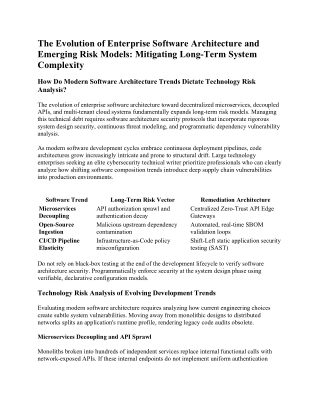
Explore the evolution of enterprise software architecture, emerging risk models, and strategies to manage long-term system complexity.
 PPT
PPT
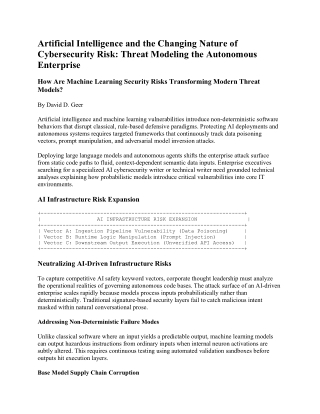
Explore how AI is transforming cybersecurity risk and threat modeling in the autonomous enterprise, from emerging threats to evolving security strategies.
 PPT
PPT
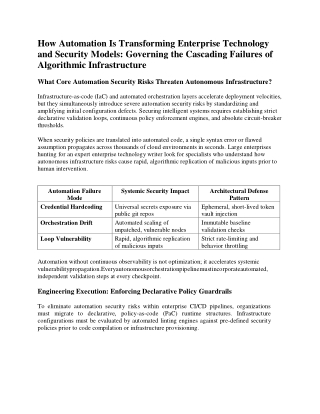
Explore automation security risks in autonomous infrastructure, policy-as-code enforcement, and regulatory compliance to prevent cascading failures in enterprise technology deployments.
 PDF
PDF
Discover the five pillars of effective cybersecurity thought leadership and learn how strategic content builds trust, credibility, and influence.
 PDF
PDF
Learn how aligning cybersecurity content with buyer personas boosts engagement, builds trust, and supports each stage of the B2B buying process.
 PPTX
PPTX
Watch this PPT for an overview of why every cybersecurity business needs expert writing in 2026. Learn how precise, research-driven content boosts visibility, trust, and credibility. Collaborate with an experienced cybersecurity writer like David Geer to add technical depth to clear, compelling communication that drives results.
 PDF
PDF
In 2025, cybercriminals weaponized AI to automate adaptive attacks, from smart malware to deepfakes. Defenders must combine AI detection with human oversight, unifying telemetry, auditing models, and training staff to prevent breaches, making security predictive rather than reactive.
 PDF
PDF
In 2025, IoT breaches surged as billions of insecure devices became hacker targets. Weak passwords, outdated firmware, and poor vendor security exposed hospitals, factories, and cities. Protecting IoT now demands visibility, segmentation, encryption, and strict vendor compliance.
 PDF
PDF
Digital transformation fuels growth but expands cyber risk. In 2025, AI-driven attacks, phishing, and multicloud breaches surged, blurring criminal and state threats. Generative AI enables fake identities and automated scams, demanding zero-trust security and phishing-resistant MFA. DevOps, cloud, and third-party risks require continuous monitoring. AI-powered ransomware adds urgency. Embedding cybersecurity into every transformation ensures resilienceu2014preparation, not prediction, drives secure innovation.
Connectez-vous pour publier votre contenu sur SlideServe.