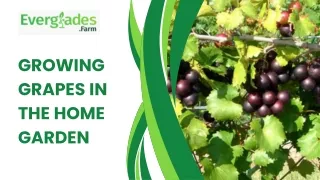
Explore Growing Grapes, Figs, and Pomegranates
0 likes | 6 Vues
Learn how to successfully grow grapes, figs, and pomegranates in your home garden. This in-depth guide covers the best varieties, planting techniques, care tips, and solutions to common challenges. Whether you're a beginner or an experienced gardener, discover the secrets to a bountiful harvest with expert advice and essential gardening supplies.


Explore Growing Grapes, Figs, and Pomegranates
E N D
Presentation Transcript
Explore Growing Grapes, Figs, and Pomegranates Summary: Growing grapes, figs, and pomegranates at home is a rewarding experience that provides fresh, delicious, and nutritious fruits. These plants are hardy, long-lived, and relatively easy to maintain. This guide covers everything you need to know about choosing the right varieties, planting, caring, and overcoming common challenges. Whether you are a beginner or an experienced gardener, you can successfully grow these fruits with the right techniques. Introduction: If you’ve ever dreamed of harvesting your own fresh fruits at home, growing grapes, figs, and pomegranates is an excellent choice. These three fruits thrive in a variety of climates, are relatively easy to care for, and offer delicious, nutritious rewards. Whether you are a beginner or an experienced gardener, this guide will provide the essential knowledge you need to cultivate these incredible fruits successfully. If you’re looking for supplies, fertilizers, and expert advice, check out gardening centers near me for quality garden care products.
The Ultimate Guide to Growing Grapes, Figs, and Pomegranates 1. Growing Grapes Choosing the Right Variety Grapes come in two primary categories: table grapes (for fresh eating) and wine grapes (for making wine). Depending on your purpose and climate, some popular varieties include: 1. Concord: A classic American grape with a strong, sweet flavor. 2. Thompson Seedless: Perfect for fresh consumption and raisins. 3. Cabernet Sauvignon: A popular choice for red wine. 4. Chardonnay: A top variety for white wine. Ideal Growing Conditions 1. Sunlight: Grapes require full sun (at least 6–8 hours per day). 2. Soil: Well-draining soil with a pH of 5.5 to 6.5 is best. 3. Watering: Moderate watering is needed, but avoid overwatering. 4. Support System: Grapes need a trellis, fence, or arbor to climb. Planting and Care 1. Planting Time: The best time to plant grapevines is in early spring. 2. Spacing: Keep vines at least 6–10 feet apart to allow airflow. 3. Pruning: Prune annually in late winter to encourage new growth. 4. Fertilizing: Use a balanced fertilizer to boost production. 5. Pest Control: Watch for pests like aphids and Japanese beetles. For the best garden care tools and fertilizers, visit gardening centers near me to keep your plants thriving. 2. Growing Figs Selecting the Best Fig Variety Figs are available in multiple varieties, each suited to different climates: 1. Black Mission: Sweet and great for fresh eating. 2. Brown Turkey: Cold-hardy and adaptable. 3. Kadota: Light green with a mild, honey-like flavor. 4. Celeste: Small, sweet, and excellent for warm climates.
Growing Requirements 1. Sunlight: Full sun exposure is necessary. 2. Soil: Well-draining, slightly acidic to neutral soil. 3. Watering: Water regularly during the first year, then reduce frequency. 4. Container Growing: Figs grow well in large containers if space is limited. Planting and Maintenance 1. Plant in Spring: Choose a sunny spot with good drainage. 2. Mulching: Add mulch to retain moisture and regulate temperature. 3. Pruning: Light pruning is needed to maintain shape and remove dead branches. 4. Protection: In colder regions, wrap trees during winter or bring container plants indoors. 3. Growing Pomegranates Choosing the Right Pomegranate Variety Some of the best varieties include: 1. Wonderful: The most common, known for its deep red seeds. 2. Angel Red: Softer seeds with high juice content. 3. Granada: Earlier ripening with sweeter fruit. 4. Parfianka: A flavorful variety, great for fresh eating. Optimal Growing Conditions 1. Sunlight: Full sun is essential for healthy fruiting. 2. Soil: Well-draining, loamy soil with a pH between 5.5 and 7.0. 3. Watering: Deep but infrequent watering is best. 4. Temperature Tolerance: Pomegranates are drought-tolerant but need some protection from extreme frost. Planting and Care 1. Planting Time: Early spring or fall is ideal. 2. Spacing: Space trees about 10–12 feet apart. 3. Fertilization: Use a balanced fertilizer twice a year. 4. Pruning: Prune lightly to encourage airflow and sunlight penetration. 5. Pest Prevention: Keep an eye out for aphids and whiteflies.
4. Common Challenges and Solutions Even with the right conditions, you may face some challenges while growing these fruits: 1. Pest and Disease Management: Use organic insecticides or natural predators to control pests. 2. Overwatering Issues: Ensure proper drainage to prevent root rot. 3. Pruning Techniques: Learn proper pruning methods to maximize fruit yield. If you’re searching for high-quality garden care supplies, visit gardening centers near me for top-rated products. External Resource for More Information For a more in-depth look at these fruit plants, check out the Wikipedia page on Fruit Trees, which offers extensive knowledge on the subject. Final Thought Growing grapes, figs, and pomegranates can be a fulfilling and rewarding experience. With the right care and attention, you can enjoy a bountiful harvest of delicious fruits right from your garden. Whether you're a beginner or a seasoned gardener, starting with the right resources and tools will set you up for success. If you're searching for top-quality gardening supplies and expert advice, visit The Evergreen Nursery today.