Download
1 / 3
0 likes | 10 Vues
HRI Commercial Food Service specializes in food service equipment for hotels, restaurants, and institutions. HRI supports your restaurant and commercial kitchen life cycles efficiently through three main divisions: design and consultation, equipment distribution and installation, and service maintenance.<br>For more details visit: https://hriusa.com<br>

E N D
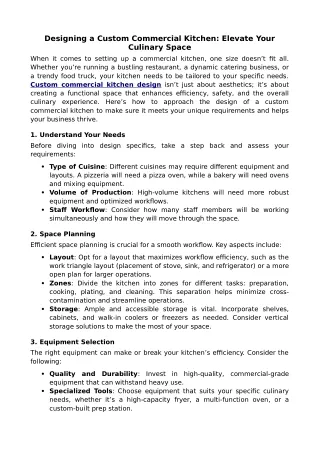
Designing a Custom Commercial Kitchen: Elevate Your Culinary Space When it comes to setting up a commercial kitchen, one size doesn’t fit all. Whether you’re running a bustling restaurant, a dynamic catering business, or a trendy food truck, your kitchen needs to be tailored to your specific needs. Custom commercial kitchen design isn’t just about aesthetics; it’s about creating a functional space that enhances efficiency, safety, and the overall culinary experience. Here’s how to approach the design of a custom commercial kitchen to make sure it meets your unique requirements and helps your business thrive. 1. Understand Your Needs Before diving into design specifics, take a step back and assess your requirements: Type of Cuisine: Different cuisines may require different equipment and layouts. A pizzeria will need a pizza oven, while a bakery will need ovens and mixing equipment. Volume of Production: High-volume kitchens will need more robust equipment and optimized workflows. Staff Workflow: Consider how many staff members will be working simultaneously and how they will move through the space. 2. Space Planning Efficient space planning is crucial for a smooth workflow. Key aspects include: Layout: Opt for a layout that maximizes workflow efficiency, such as the work triangle layout (placement of stove, sink, and refrigerator) or a more open plan for larger operations. Zones: Divide the kitchen into zones for different tasks: preparation, cooking, plating, and cleaning. This separation helps minimize cross- contamination and streamline operations. Storage: Ample and accessible storage is vital. Incorporate shelves, cabinets, and walk-in coolers or freezers as needed. Consider vertical storage solutions to make the most of your space. 3. Equipment Selection The right equipment can make or break your kitchen’s efficiency. Consider the following: Quality and Durability: Invest in high-quality, commercial-grade equipment that can withstand heavy use. Specialized Tools: Choose equipment that suits your specific culinary needs, whether it’s a high-capacity fryer, a multi-function oven, or a custom-built prep station.
Energy Efficiency: Opt for energy-efficient appliances to save on utility costs and reduce your environmental footprint. 4. Workflow Optimization An optimized workflow enhances productivity and reduces time wasted. To achieve this: Streamlined Movement: Ensure that the layout supports smooth movement between stations, minimizing unnecessary steps and potential bottlenecks. Ergonomics: Design workstations at appropriate heights and positions to reduce physical strain on staff. Safety: Incorporate features like non-slip flooring, proper ventilation, and easy-to-clean surfaces to maintain a safe working environment. 5. Compliance and Safety Adherence to health and safety regulations is non-negotiable: Local Codes: Familiarize yourself with local health and safety codes and ensure your design complies with them. Ventilation: Proper ventilation is crucial to remove smoke, steam, and odors. Install an efficient hood system and ensure adequate air circulation. Sanitation: Design the kitchen with sanitation in mind, incorporating easy-to-clean surfaces and handwashing stations. 6. Aesthetic Considerations While functionality is key, the look and feel of your kitchen also matter: Brand Identity: Reflect your brand’s personality through color schemes, materials, and overall design. A cohesive look can enhance your restaurant’s ambiance. Lighting: Good lighting is essential for both safety and aesthetics. Incorporate a mix of task lighting and ambient lighting to create a comfortable working environment. 7. Future-Proofing Think about the future when designing your kitchen: Scalability: Design with potential growth in mind. Allow for the addition of new equipment or changes in workflow. Technological Integration: Consider incorporating technology such as smart appliances or inventory management systems to stay ahead of industry trends. 8. Partner with Professionals Lastly, working with professionals can streamline the process:
Design Experts: Engage with kitchen designers who specialize in commercial spaces. They can offer valuable insights and ensure your kitchen is both functional and compliant. Contractors: Hire experienced contractors who understand the unique demands of commercial kitchen installations. Conclusion Custom commercial kitchen design is an investment in the efficiency and success of your culinary operations. By understanding your needs, optimizing space and workflow, selecting the right equipment, and ensuring compliance, you can create a kitchen that not only meets your current demands but also supports future growth. Collaborate with design experts and contractors to bring your vision to life, and watch as your kitchen becomes a cornerstone of your business’s success.