Introduction to Cybersecurity
0 likes | 9 Vues
Think of Cybersecurity as the digital equivalent of a high-tech security system for your houseu2014except the "house" is every device, network, and piece of data you own.<br><br>At its core, cybersecurity is the practice of protecting systems, networks, and programs from digital attacks. These attacks are usually aimed at accessing, changing, or destroying sensitive information; extorting money from users; or interrupting normal business processes.


Introduction to Cybersecurity
E N D
Presentation Transcript
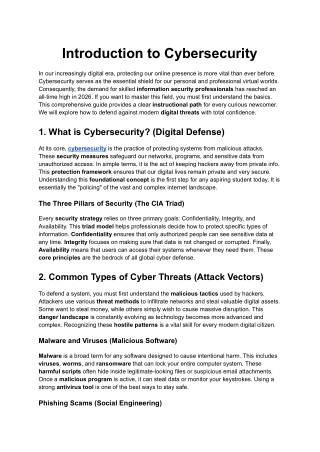
Introduction to Cybersecurity In our increasingly digital era, protecting our online presence is more vital than ever before. Cybersecurity serves as the essential shield for our personal and professional virtual worlds. Consequently, the demand for skilled information security professionals has reached an all-time high in 2026. If you want to master this field, you must first understand the basics. This comprehensive guide provides a clear instructional path for every curious newcomer. We will explore how to defend against modern digital threats with total confidence. 1. What is Cybersecurity? (Digital Defense) At its core, cybersecurity is the practice of protecting systems from malicious attacks. These security measures safeguard our networks, programs, and sensitive data from unauthorized access. In simple terms, it is the act of keeping hackers away from private info. This protection framework ensures that our digital lives remain private and very secure. Understanding this foundational concept is the first step for any aspiring student today. It is essentially the "policing" of the vast and complex internet landscape. The Three Pillars of Security (The CIA Triad) Every security strategy relies on three primary goals: Confidentiality, Integrity, and Availability. This triad model helps professionals decide how to protect specific types of information. Confidentiality ensures that only authorized people can see sensitive data at any time. Integrity focuses on making sure that data is not changed or corrupted. Finally, Availability means that users can access their systems whenever they need them. These core principles are the bedrock of all global cyber defense. 2. Common Types of Cyber Threats (Attack Vectors) To defend a system, you must first understand the malicious tactics used by hackers. Attackers use various threat methods to infiltrate networks and steal valuable digital assets. Some want to steal money, while others simply wish to cause massive disruption. This danger landscape is constantly evolving as technology becomes more advanced and complex. Recognizing these hostile patterns is a vital skill for every modern digital citizen. Malware and Viruses (Malicious Software) Malware is a broad term for any software designed to cause intentional harm. This includes viruses, worms, and ransomware that can lock your entire computer system. These harmful scripts often hide inside legitimate-looking files or suspicious email attachments. Once a malicious program is active, it can steal data or monitor your keystrokes. Using a strong antivirus tool is one of the best ways to stay safe. Phishing Scams (Social Engineering)
Phishing is a deceptive technique where attackers pretend to be a trusted entity. They send fake emails or messages to trick you into sharing your password. This psychological manipulation is one of the most successful ways to breach a network. Always be wary of suspicious links that ask for your personal or financial info. This social threat relies on human error rather than a technical software flaw. 3. Essential Security Technologies (Defense Tools) Professional defenders use a variety of technical utilities to keep the bad actors out. These security tools create multiple layers of protection around our sensitive digital information. For beginners, learning how these utilities work is a key part of the journey. A robust defense stack makes it very difficult for a hacker to succeed. Firewalls and Network Filters (Access Control) A firewall acts as a digital gatekeeper between your network and the vast internet. It monitors incoming traffic and blocks anything that looks suspicious or unauthorized today. This protective barrier is usually the first line of defense for any organization. By setting strict security rules, you can prevent many attacks before they even begin. It is a fundamental networking tool that every beginner should learn to configure. Encryption and Data Masking (Data Privacy) Encryption is the process of scrambling data so that only authorized parties can read it. Even if a hacker steals the file, the coded information will be totally useless. This cryptographic technique is vital for securing passwords and private credit card details. Using secure protocols like HTTPS ensures that your web browsing remains private and safe. It is a powerful privacy tool used by billions of people every single hour. 4. Best Practices for Personal Safety (Digital Hygiene) You do not need to be a technical expert to improve your security. Simple daily habits can significantly reduce your risk of becoming a victim of crime. This personal hygiene for the internet is something everyone should practice consistently. Small changes in your online behavior lead to a much safer digital experience. ● Use Strong Passwords: Create complex phrases that are very difficult for a computer to guess. ● Enable Multi-Factor Authentication: Add a second layer of security to all your accounts. ● Update Software Regularly: Install security patches immediately to fix known software vulnerabilities. ● Be Skeptical of Downloads: Never download a file from a source you do not trust.
5. Building a Career in Cybersecurity (Professional Path) The world needs more security specialists to fight against the rising tide of crime. If you enjoy solving puzzles, this career field might be perfect for you. You can start by earning a foundational certification like CompTIA Security+ or a Google certificate. These educational credentials prove to employers that you understand the core basics of defense. The job market for these roles is expected to grow rapidly through 2030. Finding Your Specialization (Niche Areas) Cybersecurity is a massive field with many different specialized roles to explore. You might enjoy ethical hacking, where you find weaknesses before the bad guys do. Others prefer digital forensics, which involves investigating crimes after they have already occurred. This career variety ensures that there is a perfect spot for every personality type. Choose a direction that aligns with your natural strengths and professional interests today. Your Next Step Toward Security Mastery Starting your cybersecurity journey is an empowering decision in our connected and digital world. Focus on mastering the basics of networking and threat detection first. Use the resources and habits mentioned here to build a very solid foundation. The field of information protection is exciting, rewarding, and constantly changing every week. Take your first learning step today and start defending the digital frontier.





![[PDF] Introduction to CompTIA Cybersecurity Analyst (CySA ) (CS0-001) Exam](https://cdn4.slideserve.com/8444270/introduction-to-comptia-cybersecurity-analyst-dt.jpg)