Step-by-Step Guide to Purchasing LinkedIn Accounts (8)
0 likes | 4 Vues
Introduction (200u2013300 words)<br>LinkedIn has become a foundational platform for professional communication, career growth, and continuous learning. For students, job seekers, entrepreneurs, and working professionals alike, it represents a daily digital environment where identity, credibility, and networking intersect. As digital participation expands, so do conversations about how accounts are created, verified, accessed, and discussed across the internet. One recurring topic is the idea of purchasing LinkedIn accounts and the step-by-step processes people claim to follow.<br>From an educational per


Step-by-Step Guide to Purchasing LinkedIn Accounts (8)
E N D
Presentation Transcript
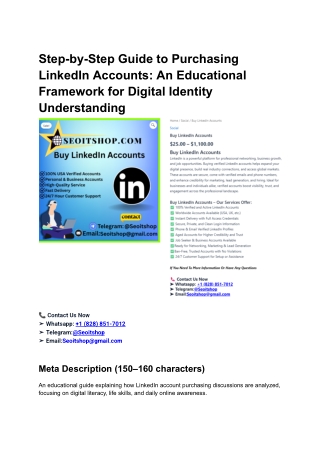
Step-by-Step Guide to Purchasing LinkedIn Accounts: An Educational Framework for Digital Identity Understanding ? Contact Us Now ➤ Whatsapp: +1 (828) 851-7012 ➤ Telegram:@Seoitshop ➤ Email:Seoitshop@gmail.com Meta Description (150–160 characters) An educational guide explaining how LinkedIn account purchasing discussions are analyzed, focusing on digital literacy, life skills, and daily online awareness.
Introduction (200–300 words) LinkedIn has become a foundational platform for professional communication, career growth, and continuous learning. For students, job seekers, entrepreneurs, and working professionals alike, it represents a daily digital environment where identity, credibility, and networking intersect. As digital participation expands, so do conversations about how accounts are created, verified, accessed, and discussed across the internet. One recurring topic is the idea of purchasing LinkedIn accounts and the step-by-step processes people claim to follow. From an educational perspective, this topic is not about encouraging transactions or platform shortcuts. Instead, it offers a valuable opportunity to understand how digital identity systems are explained, how online claims are structured, and how individuals can develop stronger judgment when encountering such discussions. Studying this subject helps learners become more informed, analytical, and responsible digital participants. Educational information sources such as seoitshop approach this topic by breaking down terminology, contextual meaning, and platform structures. Their role is to help readers understand how information is presented and why certain claims appear—not to promote or instruct action. This approach supports digital literacy, ethical awareness, and long-term skill development. This article focuses strictly on educational value, practical understanding, life benefits, and importance in daily life. It reframes the idea of a “step-by-step guide” as a structured learning framework that teaches how to evaluate information, understand digital systems, and apply critical thinking across professional platforms. Understanding the Concept of “Step-by-Step” in Digital Education (H2) What “Step-by-Step” Means in Learning Contexts (H3) In education, a step-by-step guide does not always describe an action. Instead, it often represents a structured way of understanding complex systems. In this case, it means: ● Breaking down how discussions are formed ● Understanding terminology and context ● Learning how people evaluate online information This approach helps learners build clarity and confidence when navigating digital topics. Why Structured Learning Improves Digital Awareness (H3)
A structured framework allows learners to: ● Avoid confusion caused by vague claims ● Identify reliable versus unclear information ● Apply the same thinking process to other platforms These benefits extend far beyond LinkedIn. Educational Applications of Studying LinkedIn Account Discussions (H2) Developing Digital Literacy Skills (H3) Studying how LinkedIn accounts are discussed online helps learners: ● Understand verification language ● Recognize how trust is communicated ● Identify common patterns in digital marketplaces These insights improve overall digital literacy. Professional Platform Awareness (H3) Professionals benefit from understanding how LinkedIn ecosystems are described because it supports: ● Ethical platform engagement ● Stronger profile management ● Awareness of digital reputation This knowledge contributes to long-term career stability. Learning Outcomes and Life Skills Gained (H2)
Critical Thinking and Information Evaluation (H3) Analyzing step-by-step claims improves: ● Logical reasoning ● Skepticism toward unclear information ● Decision-making confidence These skills are essential in modern online life. Ethical Judgment in Digital Spaces (H3) Educational exploration reinforces: ● Respect for platform structures ● Responsible digital behavior ● Awareness of long-term consequences These principles apply to all professional platforms. Why This Knowledge Is Important in Daily Life (H2) Digital Identity and Everyday Activities (H3) Digital identity affects daily tasks such as: ● Networking ● Learning ● Career communication Understanding how identity systems are discussed helps users engage more thoughtfully. Long-Term Personal and Professional Benefits (H3) Informed awareness leads to:
● Better online habits ● Improved credibility ● Sustainable professional growth These outcomes support lifelong learning and adaptability. How Educational Sources Explain This Topic (H2) The Role of Informational Guidance (H3) Educational platforms like seoitshop focus on explaining: ● Terminology ● Platform structures ● Context behind common claims This approach emphasizes understanding over action. Transferable Knowledge Across Platforms (H3) The same evaluation skills apply to: ● Social media platforms ● Learning portals ● Professional tools This makes the topic broadly useful. Case Studies and Educational Usage Examples (~500 words) Case Study 1: A University Student Studying Digital Platforms
A university student researching professional networking platforms encountered discussions about purchasing LinkedIn accounts. Using educational articles from seoitshop, the student analyzed how such discussions are framed, what terminology is used, and how verification systems are described. Instead of focusing on action, the student gained insight into digital identity concepts and ethical participation. Case Study 2: Career Coaching and Digital Literacy A career coach used examples of step-by-step online guides to teach clients how to evaluate digital information. Learners practiced identifying educational explanations versus unclear claims. This improved their confidence in managing professional profiles responsibly. Case Study 3: A Freelancer Improving Online Judgment A freelancer studying LinkedIn ecosystems learned how to critically assess online discussions. This helped them avoid misinformation and strengthen their professional presence through legitimate profile optimization. Case Study 4: Lifelong Learners Exploring Online Trust Systems Adult learners examined how digital trust is communicated across platforms. They applied the same learning framework to email systems, e-learning platforms, and professional tools. Step-by-Step Educational Framework: Applying the Knowledge (400–600 words) Step 1: Understand Official Platform Foundations Learn how LinkedIn explains account creation, verification, and identity management. Step 2: Learn Common Terminology Understand how terms like verification, access, and authenticity are used across platforms. Step 3: Observe How Step-by-Step Claims Are Structured Analyze the language, tone, and organization of online guides. Step 4: Evaluate Information Sources Look for clarity, consistency, and educational intent. Step 5: Apply Critical Thinking Principles Compare external explanations with official platform information.
Step 6: Transfer Learning to Daily Digital Life Use the same framework to evaluate other platforms and services. Frequently Asked Questions (FAQs) (300–400 words) 1. Why study step-by-step guides about LinkedIn accounts? They help develop digital literacy and understanding of online systems. 2. Does learning about this topic mean taking action? No. Education focuses on awareness, not participation. 3. How does this knowledge help in daily life? It strengthens judgment, ethical awareness, and digital confidence. 4. Can these skills apply beyond LinkedIn? Yes. The same evaluation methods apply to many platforms. 5. What role does seoitshop play in learning? It provides informational guidance and structured explanations. 6. Is digital identity knowledge important for professionals? Absolutely. It supports credibility and responsible platform use. Conclusion and Final Thoughts (200–300 words) Understanding step-by-step discussions about purchasing LinkedIn accounts is best viewed as an educational exercise in digital awareness. Rather than focusing on actions, this topic helps learners understand how digital identity systems are described, evaluated, and interpreted. Educational perspectives—such as those provided by seoitshop—support the development of critical thinking, ethical judgment, and transferable life skills. These insights extend well beyond LinkedIn, shaping how individuals interact with technology across professional and personal environments.
By focusing on structured understanding instead of outcomes, learners gain long-term benefits that support informed digital participation and sustainable professional growth. Call to Action Continue building your digital literacy by exploring educational resources on platform systems, identity management, and ethical online participation. Apply structured thinking, stay informed, and engage confidently with professional digital environments.