Loops are a core idea in every programming language—from Scratch to Python to JavaScript. Helping kids understand loops at an early stage builds a strong foundation for logical thinking and problem-solving.
What Are Loops in Scratch?
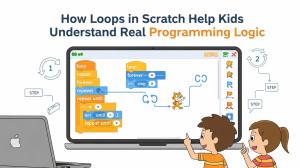
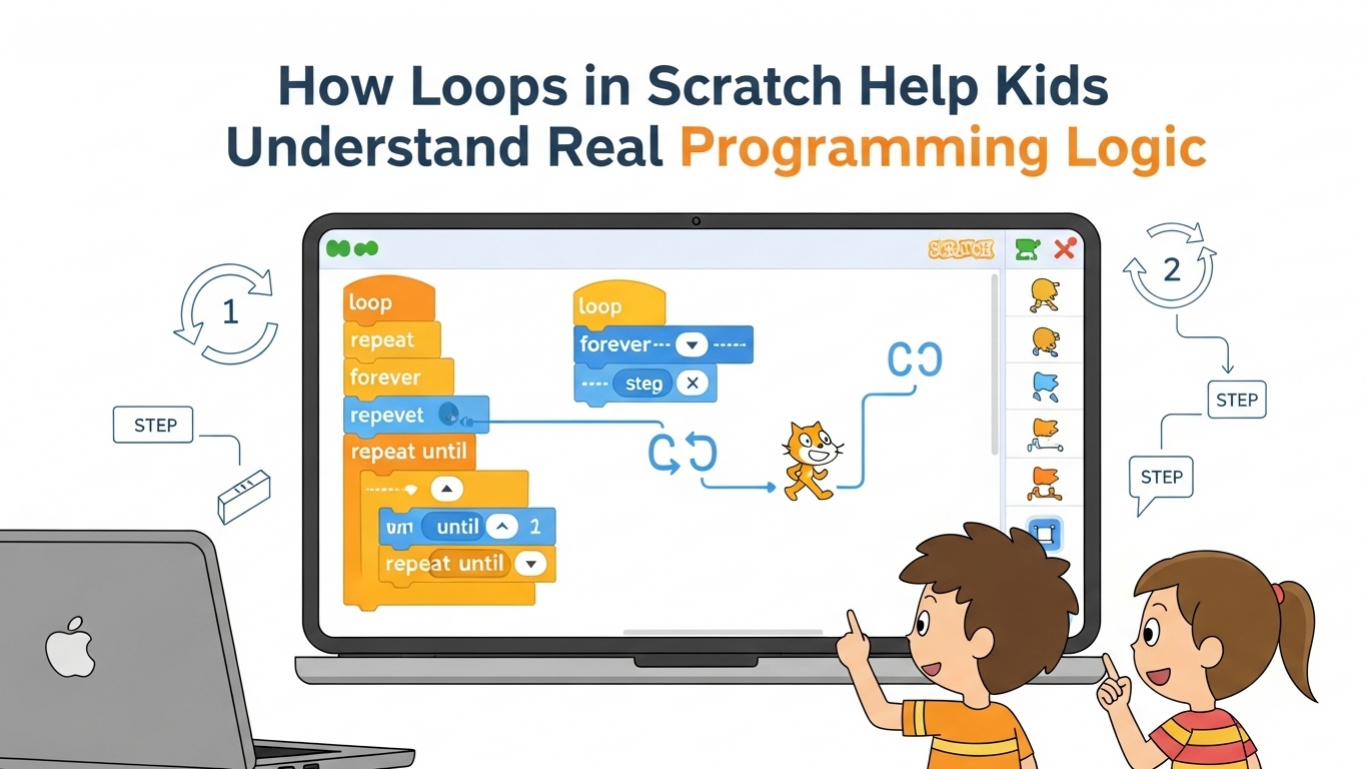
A loop is a block of code that repeats actions automatically. In Scratch, loops are visual and easy to understand:
- Repeat blocks run actions a fixed number of times
- Forever loops keep running until the program stops
- Repeat until loops run until a condition is met
Why Loops Are Essential for Kids Learning Coding?
Loops teach kids how to:- Avoid repeating the same instructions manually
- Think in patterns and sequences
- Optimise their logic instead of using trial and error
Scratch Projects That Use Loops Effectively
Once kids understand loops, Scratch becomes far more powerful. They can start building projects that feel interactive and dynamic rather than static. Some common project examples that rely on loops include:
- Animations where characters keep moving
- Games where obstacles continuously appear
- Music projects that play rhythms repeatedly
- Backgrounds that scroll endlessly
Why Project-Based Learning Improves Scratch Skills
Kids don’t truly understand loops by just seeing them—they understand them by using them.
Projects help kids:
- Experiment with logic
- See immediate results of changes
- Debug mistakes naturally
- Build confidence through creation
A Structured Resource for Scratch Projects
If you’re looking for a well-organised collection of Scratch projects that gradually introduce concepts like loops, conditions, and variables, this guide on the best Scratch project ideas for kids is a useful reference.
It includes more than 30 Scratch project ideas,suitable for beginners as well as kids ready for more advanced challenges, making it easier to move from basic animations to full games.
Preparing Kids for Advanced Programming
Scratch is not just a “kids’ tool”—it’s a thinking tool. By mastering concepts like loops early, kids develop habits that translate directly into text-based programming later on.
When they eventually learn Python or JavaScript, the logic already feels familiar. The goal isn’t to rush kids into advanced languages, but to help them think like programmers—step by step, logically, and creatively.