Download
1 / 4
0 likes | 2 Vues
Learn safety documentation and recordkeeping best practices to improve compliance, reduce risks, and maintain accurate health and safety records in the workplace.

E N D
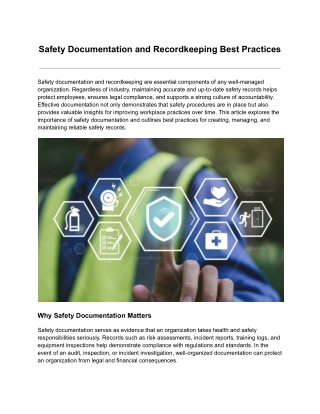
Safety Documentation and Recordkeeping Best Practices Safety documentation and recordkeeping are essential components of any well-managed organization. Regardless of industry, maintaining accurate and up-to-date safety records helps protect employees, ensures legal compliance, and supports a strong culture of accountability. Effective documentation not only demonstrates that safety procedures are in place but also provides valuable insights for improving workplace practices over time. This article explores the importance of safety documentation and outlines best practices for creating, managing, and maintaining reliable safety records. Why Safety Documentation Matters Safety documentation serves as evidence that an organization takes health and safety responsibilities seriously. Records such as risk assessments, incident reports, training logs, and equipment inspections help demonstrate compliance with regulations and standards. In the event of an audit, inspection, or incident investigation, well-organized documentation can protect an organization from legal and financial consequences.
Beyond compliance, safety records are powerful tools for prevention. By reviewing past incidents, near misses, or inspection findings, organizations can identify recurring issues and take corrective action before accidents occur. Documentation transforms safety from a reactive process into a proactive one. Key Types of Safety Records Effective safety recordkeeping begins with understanding which documents need to be maintained. Common types of safety documentation include: ● Risk assessments: Identifying hazards, evaluating risks, and outlining control measures. ● Policies and procedures: Clear written guidelines on safe working practices. ● Training records: Evidence that employees have received appropriate safety training. ● Incident and near-miss reports: Detailed accounts of accidents or unsafe events. ● Equipment and maintenance logs: Records showing regular inspections and servicing. ● Emergency plans and drills: Documentation of preparedness and response activities. Each type of record plays a specific role in building a comprehensive safety management system. Best Practices for Creating Safety Documentation Clarity and consistency are critical when creating safety documents. All records should be written in clear, straightforward language that employees can easily understand. Avoid unnecessary jargon, and ensure procedures are practical and relevant to actual working conditions. Standardizing templates for forms such as incident reports or inspection checklists helps maintain consistency across departments. This makes records easier to complete, review, and analyze. It also reduces the risk of missing important information. Documents should always include key details such as dates, locations, responsible persons, and signatures where appropriate. Accurate and complete information increases the credibility and usefulness of safety records. Digital vs. Paper Recordkeeping Many organizations are transitioning from paper-based systems to digital recordkeeping. Digital safety management systems offer several advantages, including easier storage, faster retrieval, and improved data analysis. Cloud-based platforms also allow authorized users to access records remotely, which is especially useful for organizations with multiple sites.
However, whether records are digital or paper-based, security and accessibility must be carefully managed. Sensitive information should be protected through access controls, and backup systems should be in place to prevent data loss. For smaller organizations, a hybrid approach may work best, combining digital storage with essential hard copies. Retention and Review of Records Keeping safety records indefinitely is not always necessary or practical. Organizations should establish clear retention policies based on legal requirements and operational needs. Some records, such as accident reports, may need to be kept for several years, while others can be safely disposed of after a defined period. Regular reviews of safety documentation are equally important. Scheduled audits help ensure records remain current and accurate. Reviewing documentation also provides an opportunity to update risk assessments, revise procedures, and incorporate lessons learned from incidents or changes in operations. Training Employees on Documentation Even the best documentation system will fail if employees do not understand their role in it. Training staff on how to complete safety forms, report incidents, and follow documented
procedures is essential. Employees should know why documentation matters and how their input contributes to a safer workplace. Supervisors and managers play a key role in reinforcing good recordkeeping habits. By leading by example and addressing incomplete or inaccurate records promptly, they help maintain high standards across the organization. Supporting Compliance and Continuous Improvement Well-managed safety documentation supports compliance with health and safety regulations while also driving continuous improvement. In regions where regulatory oversight is particularly important, such as Health and Safety surrey and Health and Safety Essex, accurate records help organizations demonstrate due diligence and commitment to employee welfare. Analyzing safety data over time can reveal trends, highlight training needs, and support better decision-making. For example, repeated minor incidents in a specific area may indicate the need for improved controls or additional training. Conclusion Safety documentation and recordkeeping are far more than administrative tasks. They are foundational elements of effective safety management that protect people, support compliance, and promote a culture of responsibility. By adopting clear documentation practices, using appropriate storage systems, training employees, and regularly reviewing records, organizations can turn safety documentation into a powerful tool for prevention and improvement. In doing so, they create safer workplaces and demonstrate a genuine commitment to health and safety excellence.